
Free written scope consultation - allowances, timeline, and change-order rules on paper before a single trade is scheduled
James Hardie Roofing: The Homestead Owner’s Guide
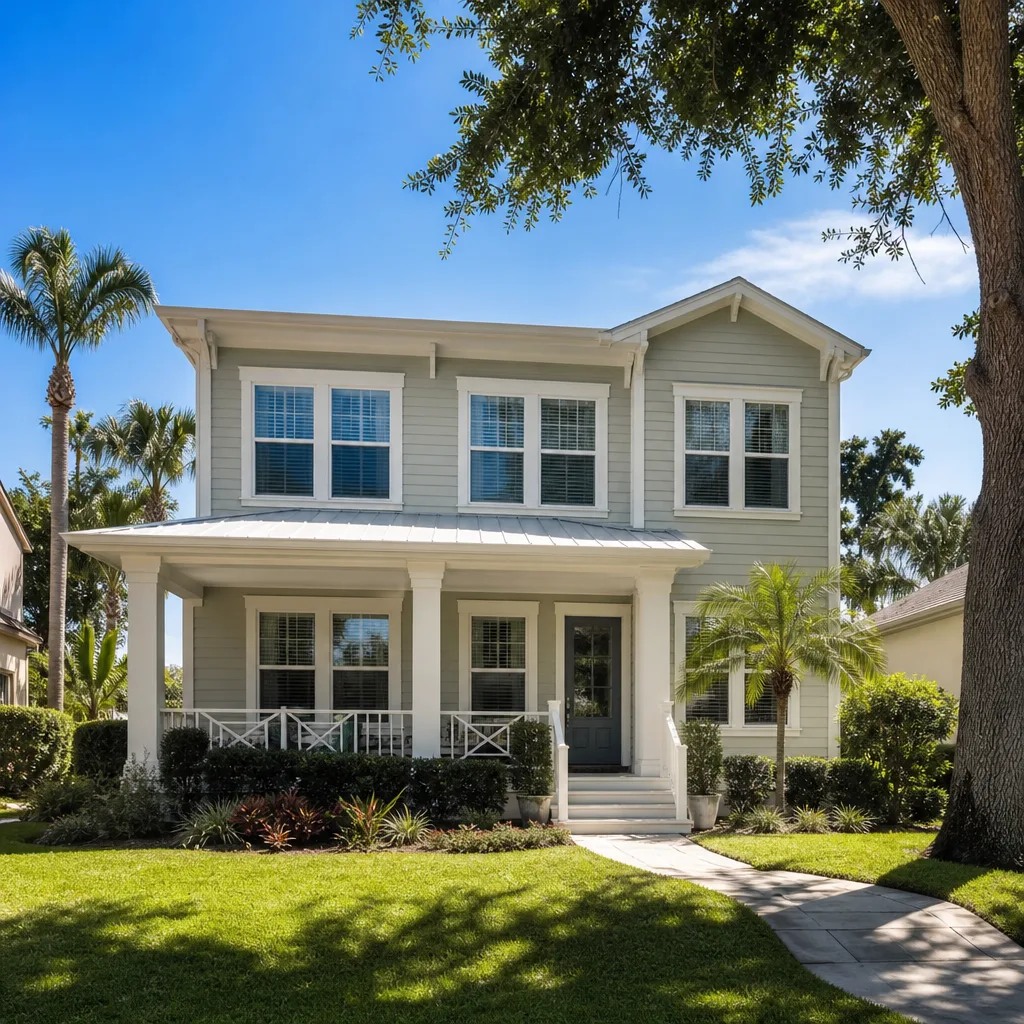
James Hardie makes fiber cement siding and trim, and its products show up on Homestead roofs most often as fascia, soffit, trim boards and gable accents around a shingle or tile field. When those fiber cement pieces fail, we replace them with James Hardie-compatible material, and a typical repair runs $400 – $1,800 while a full roof replacement in Homestead lands between $8,000 and $20,000. We can usually assess a failing piece and give you a written price the same week you call.
Owners in Homestead tend to discover the problem the same way. A brown stain blooms across a soffit after a summer storm, or a fascia board along the eave starts to feel soft when pressed. Sometimes a painter refuses to paint over a section because it crumbles under the scraper. Homestead’s salt air, hurricane-season wind-driven rain and near-constant humidity work on fiber cement edges and end joints first, and that is usually where the trouble announces itself.
Which James Hardie Models This Applies To
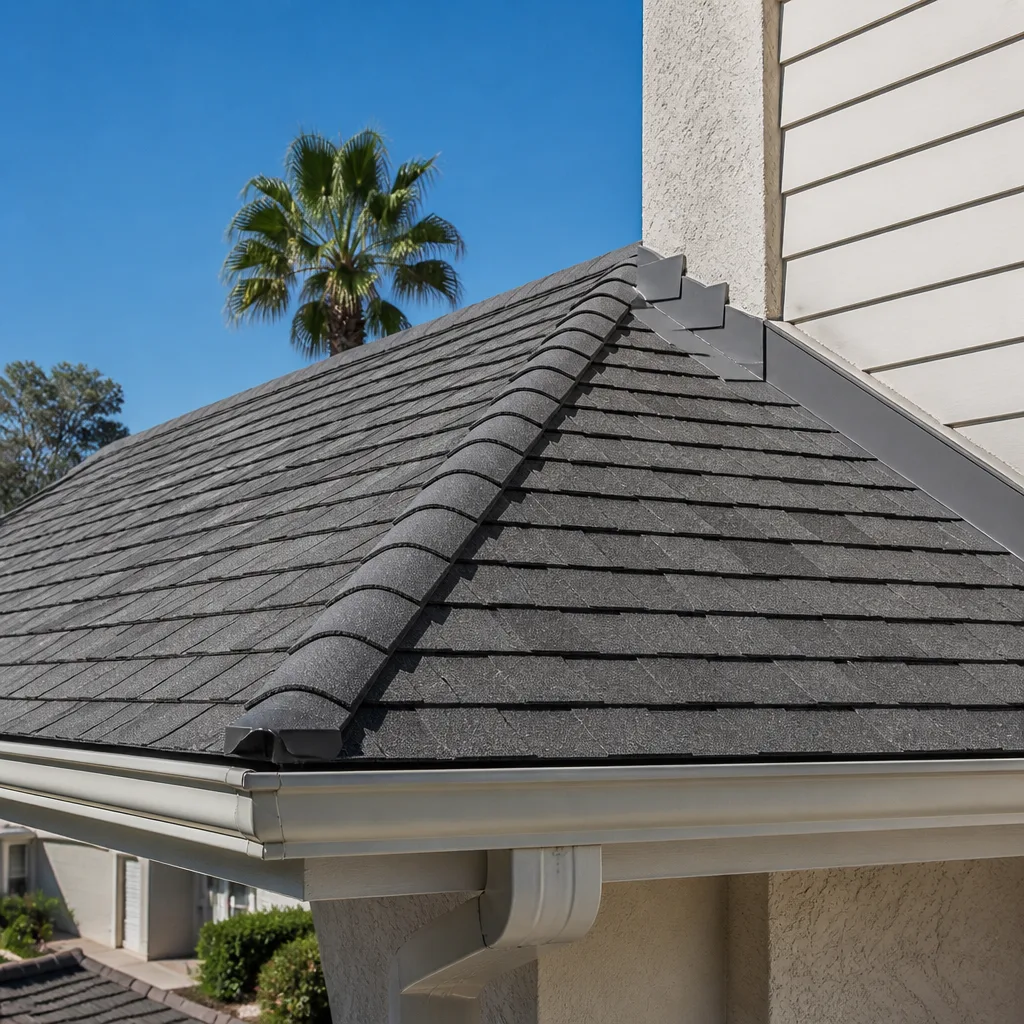
James Hardie fiber cement is sold under a few product families, and the names matter when you are matching a replacement piece. HardiePlank is the lap siding line. HardiePanel is the vertical panel. HardieTrim covers the trim boards, and HardieSoffit covers the soffit panels, in thicknesses from roughly 5/16 inch up to 1 inch depending on the product. On a Homestead roof, the pieces you are most likely replacing are HardieTrim fascia boards and HardieSoffit panels, though HardiePlank on a gable end can also sit high enough to count as roof-edge work.
To identify what you have, check the back of a loose piece or the exposed edge for a printed label with the product name and dimensions. If no label is visible, measure the thickness and width precisely and match against the product line. This is where a compatibility gotcha bites: fiber cement trim is not interchangeable with wood trim of the same nominal size, because the actual thickness and the fastener requirements differ, and a mismatched piece will telegraph through paint within a season in Homestead’s heat.
For James Hardie specifically, the OEM-versus-aftermarket decision comes down to exposure. On the roof edge, we generally source genuine James Hardie-compatible product because the factory primer and the board’s moisture behavior are the whole reason it lasts. Cheaper cement board from an unknown mill can look identical on day one and start failing at the cut edges within a couple of hurricane seasons. We source across fifty-plus vetted brands and will tell you plainly when a genuine piece is worth the difference and when it is not. Rowan Construction Group Homestead is an independent service provider and is not affiliated with James Hardie.
Styles & brands we work with
- Kitchen remodeling
- Bathroom remodeling
- Home additions & ADU
- Roofing
- Windows & doors
- Driveway & pavers
- Fence
Signs Your James Hardie Roofing Is Failing
Five symptoms we see repeatedly on Homestead roofs, each with the cause behind it:
- Soft or crumbly fascia along the eave. Water has been wicking into an unpainted end or a failed joint, and the fiber cement is breaking down from the inside. Homestead’s driving rain finds those edges fast.
- Paint peeling in sheets rather than flakes. Fiber cement that peels in sheets usually had moisture trapped behind the coating, often from a soffit or fascia that was never properly primed at the cut.
- Brown or rust-colored stains streaking down a soffit panel. That is usually corrosion from a fastener or flashing above the fiber cement, running down onto it. The stain is the symptom; the metal is the cause.
- Visible gaps at end joints or butt joints. Fiber cement expands and contracts with heat, and joints that were sealed tight at install open up when the caulk ages. Once a gap opens, water gets behind the board.
- Chalking or a white powder on the surface. Some chalking is normal aging, but heavy chalking that wipes off on your hand often means the factory finish is at the end of its life and the board is unprotected.
See the difference
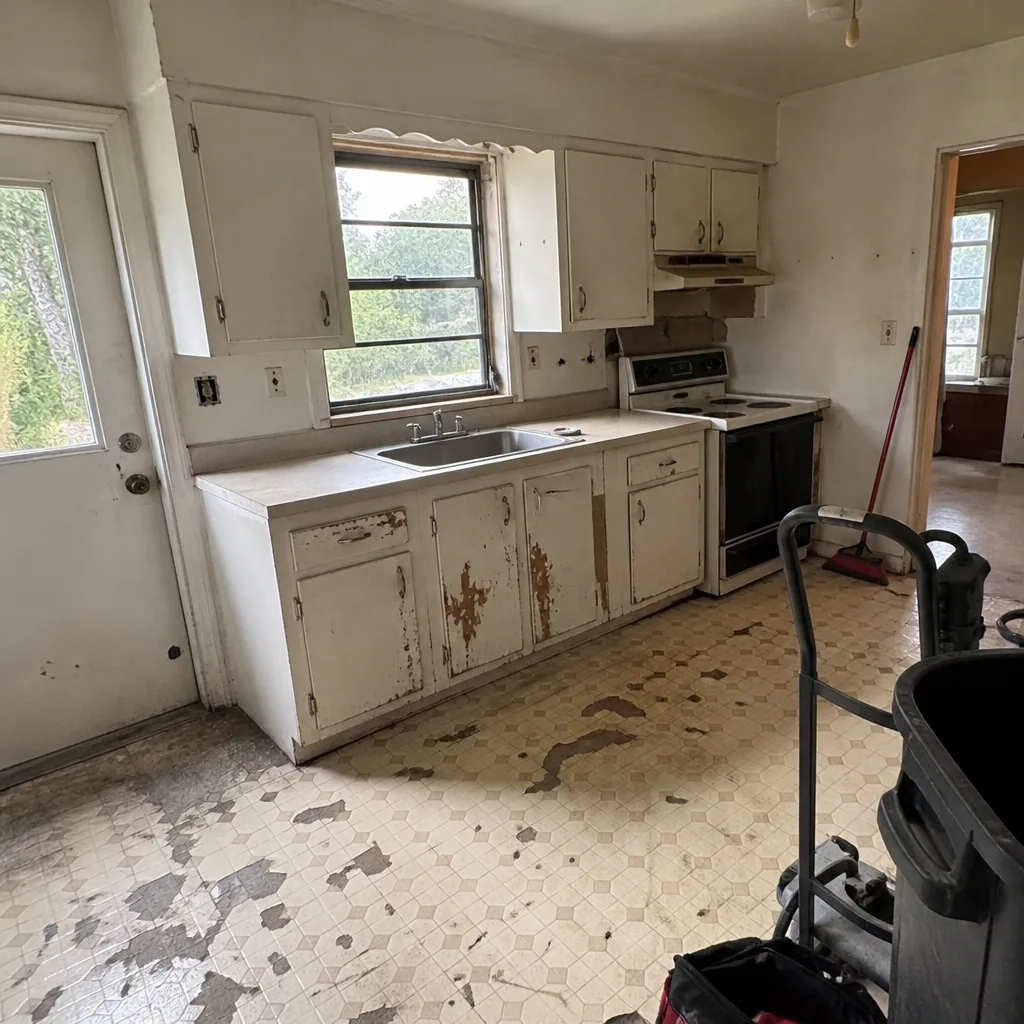 Before
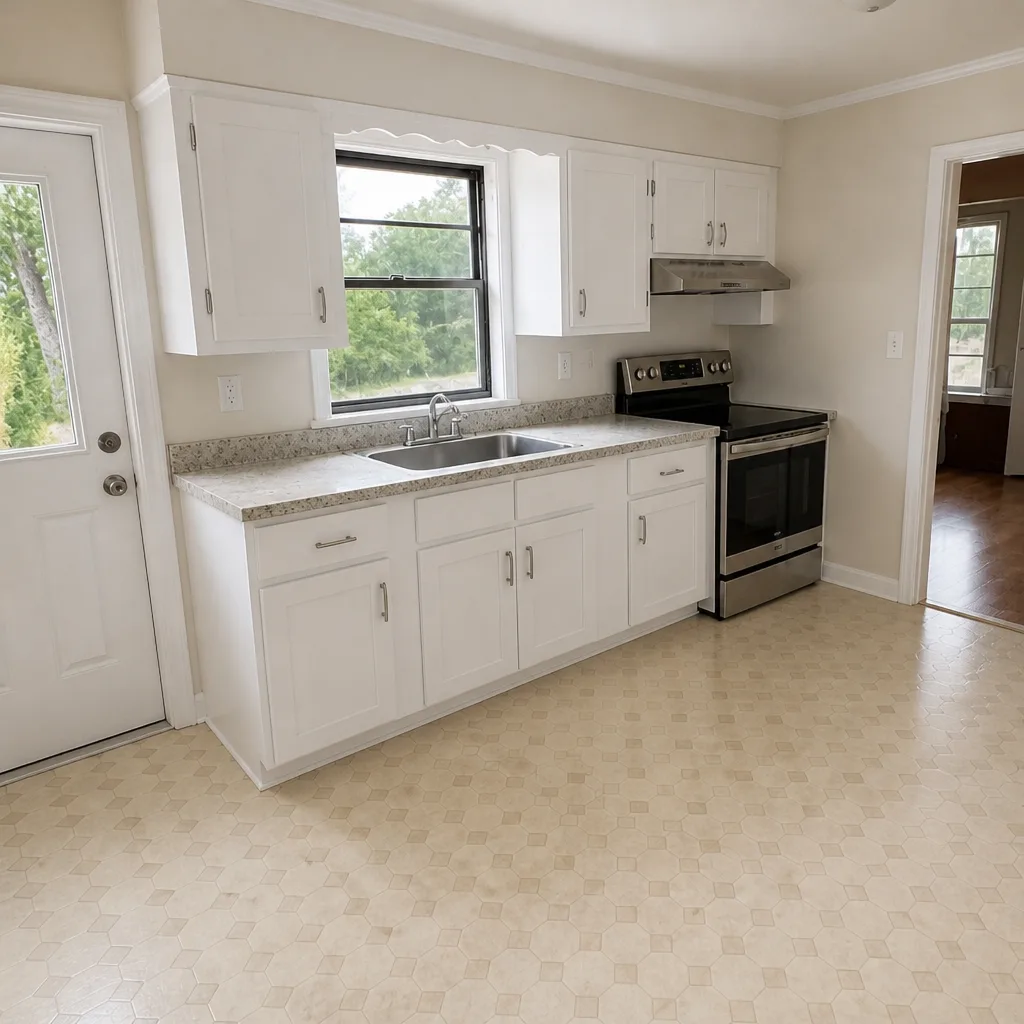 After
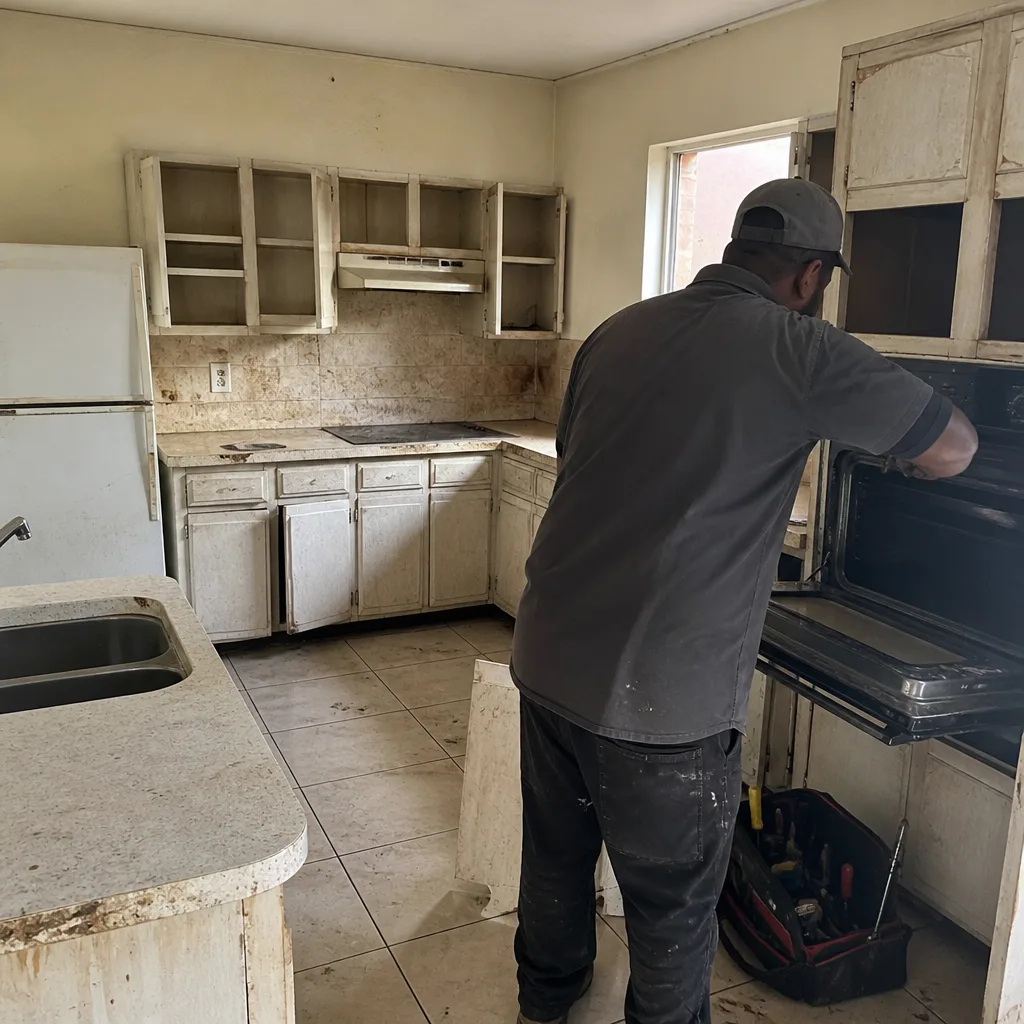 Before
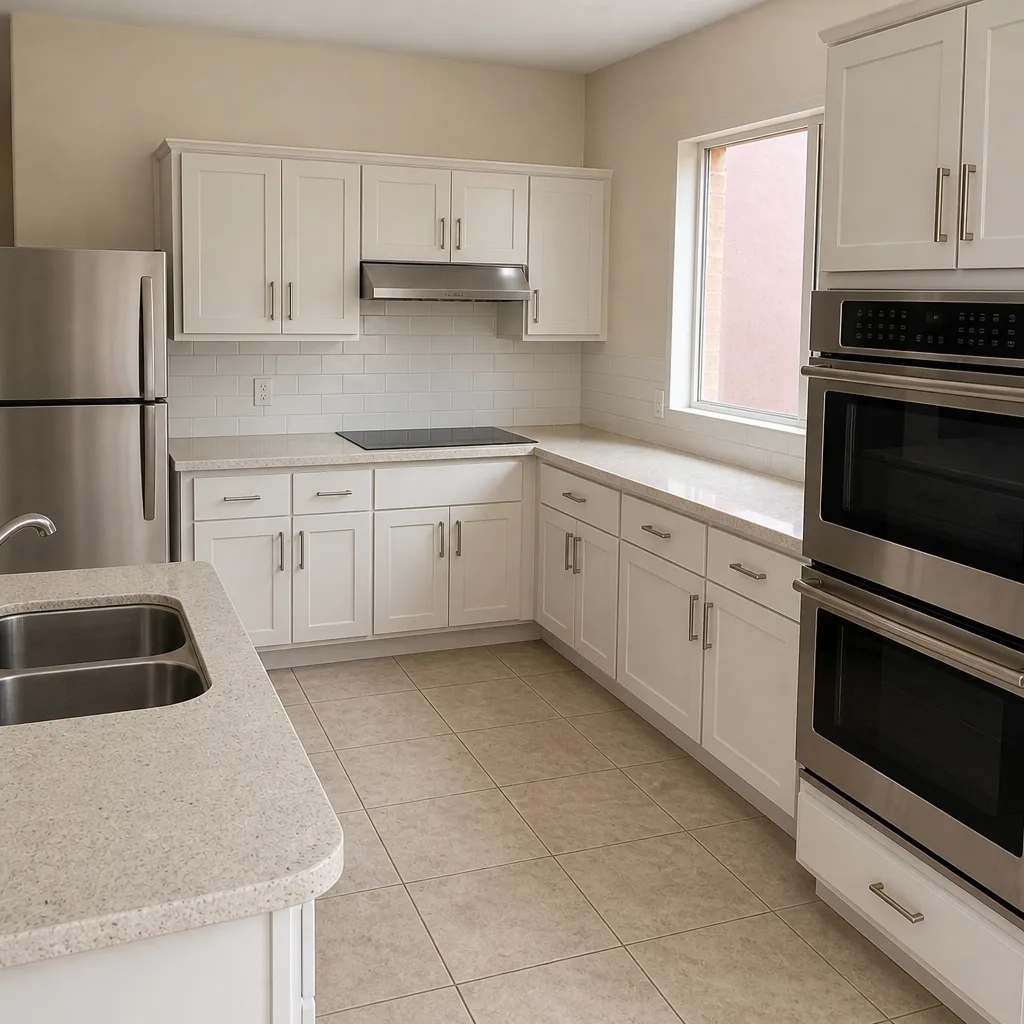 After
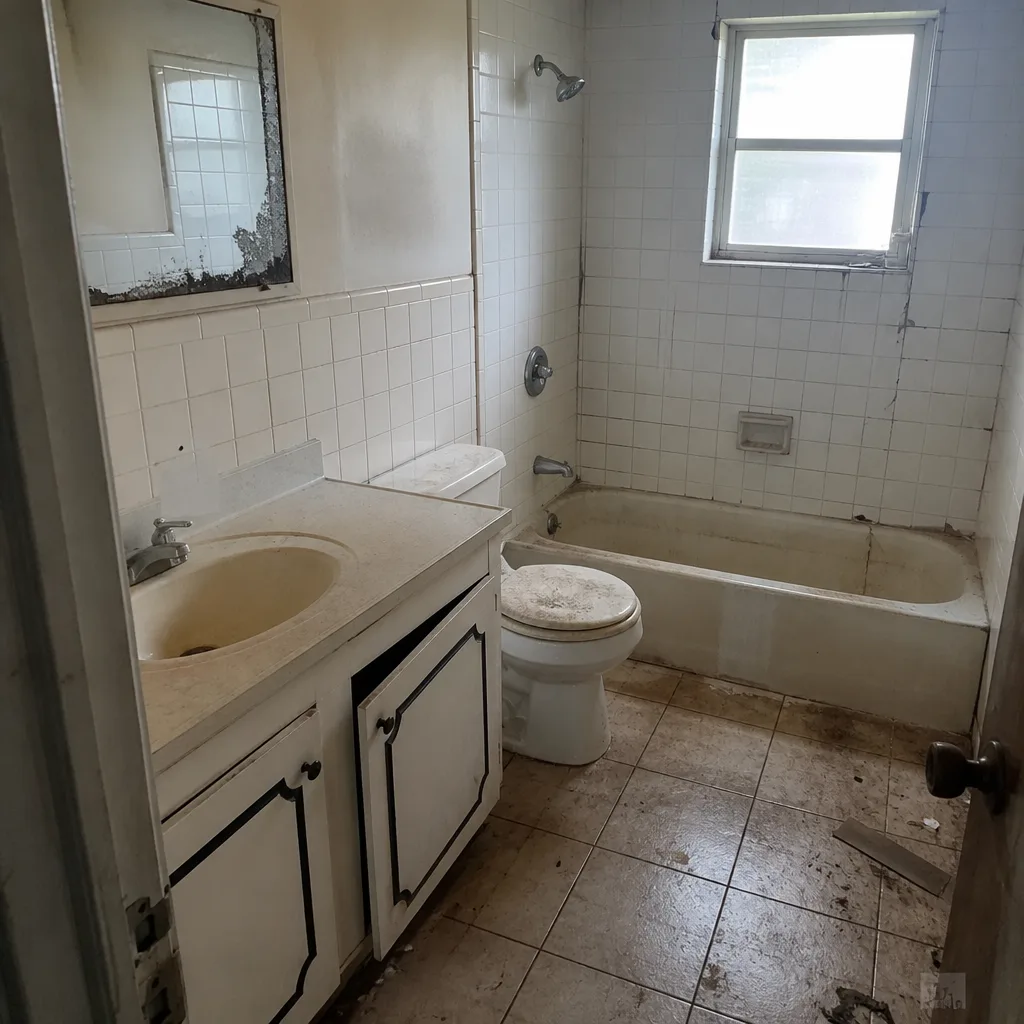 Before
 After
Replacement Cost & What’s Included
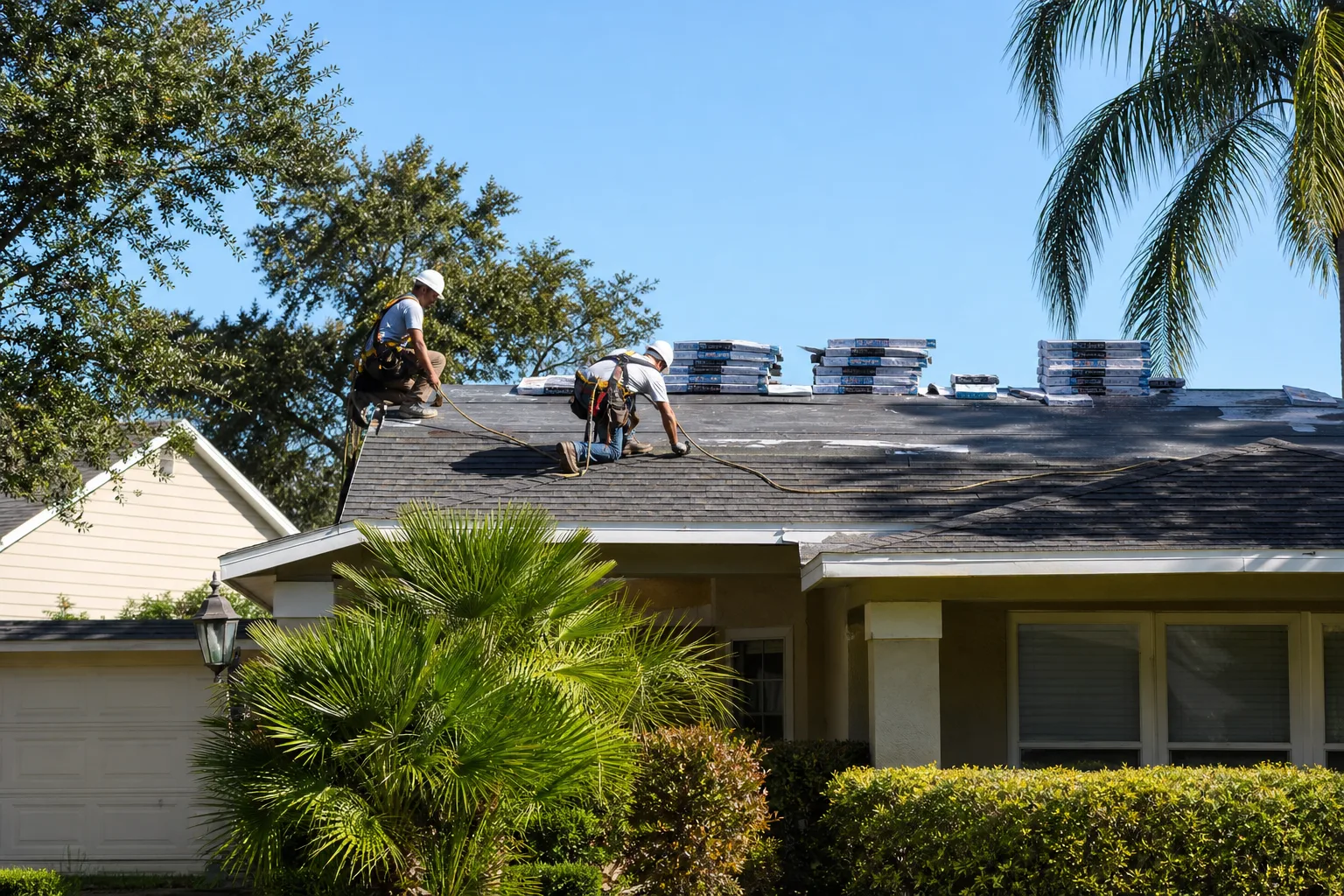
Installed pricing in Homestead depends on how much fiber cement is involved and how much of the roof edge has to come apart to get to it. Ranges you can expect:
| Scope | Installed price in Homestead |
|---|---|
| Roof repair (targeted fascia, soffit or trim repair) | $400 – $1,800 |
| Tile roof repair (where fiber cement trim meets tile) | $600 – $2,500 |
| Full roof replacement including fiber cement trim and soffit | $8,000 – $20,000 |
What drives the range is lineal footage, access height, whether the failing piece sits behind flashing, and whether the underlying fastener or metal staining has to be fixed first. We quote parts and labor as separate lines so you can see the material cost and the labor cost, not a single lump. A written price is delivered before any work begins, and no change proceeds without a signed change order. The work carries our 365-Day Done Right Promise, printed on the quote and backed by our terms page. Bring a competitor’s estimate and we will review it line by line at no charge.
DIY or Call Us?
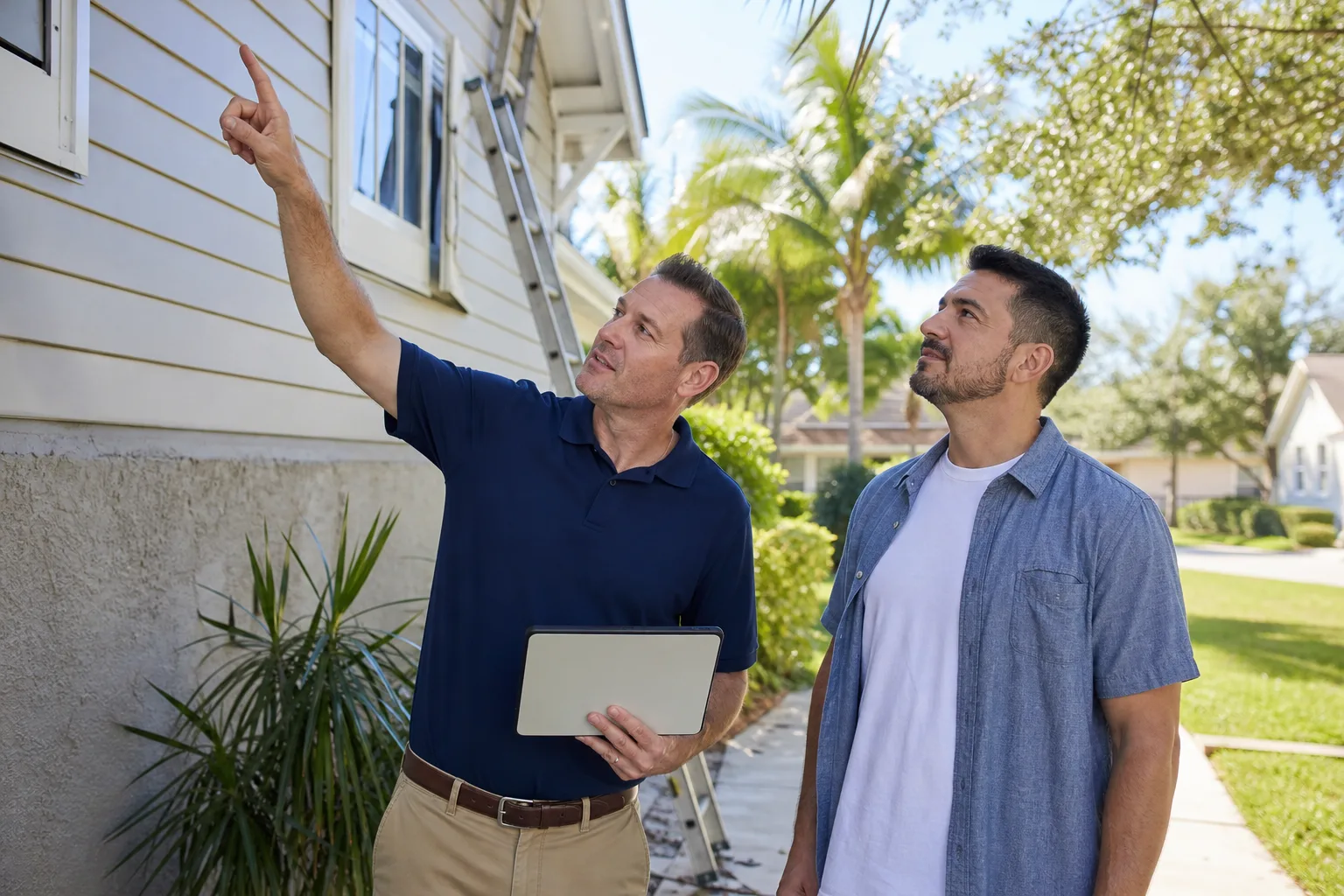
You can safely check a few things yourself. Look at the exposed edge of a fiber cement piece for softness or crumbling. Note whether the paint is peeling in sheets or flakes. Photograph any staining so you can describe where it starts. What you should not do is climb onto a steep roof or start prying fascia behind flashing to see what is under it. That is where homestead owners get hurt, and it is where an amateur repair often makes the water path worse rather than better.
Fiber cement also has a real hazard beyond the fall risk: cutting and sanding it releases silica dust, and the piece has to be handled with the right blades and respiratory protection. Our technicians have up to 19 years of experience with this material and arrive background-checked and uniformed, with a documented photo record of what they found and what they did. Call (844) 834-4248 for a free estimate and we will give you a written price before anyone picks up a tool.
FAQs
Genuine James Hardie fiber cement can last decades when it is properly primed at the cuts and kept painted, but Homestead’s salt air and hurricane-season rain shorten that timeline if edges and joints are neglected. The board itself is durable; the failure point is almost always the cut edge or the caulked joint, not the panel face.
Sometimes. A small area of failing paint or a single soft spot at a joint can often be repaired, which is why our roof repair range starts at $400. If the board is crumbling through its thickness or the water has reached the fastener behind it, replacement is the honest answer. We will tell you which one you are looking at.
A targeted fascia or soffit repair is usually a single-day job, while replacing fiber cement across a full roof edge takes longer and depends on height and how much trim is involved. You get the schedule in writing with the price so you know what to plan for.
We match the product family and dimensions first, then source genuine James Hardie-compatible material for exposed roof-edge work where the factory finish matters. We also service KraftMaid, Cambria and Silestone products, and we will show you the material we are quoting so you can compare it to what is on your house.
Call (844) 834-4248 for a free estimate on your James Hardie roofing repair or replacement in Homestead. You will get a written price, a written scope and a written warranty before any work starts.
Written by the team at Rowan Construction Group Homestead, serving Homestead and nearby areas.