Last updated November 17, 2026

Free written scope consultation - allowances, timeline, and change-order rules on paper before a single trade is scheduled
The Complete Bathroom Remodeling Guide for Homestead Homeowners
Moving a toilet six inches in a slab-on-grade home, the standard construction type across most of Homestead, means saw-cutting the concrete floor and re-routing the drain line. That single decision adds $800 to $2,200 to a bathroom budget and two to four days to the schedule. It’s also the decision most homeowners make without knowing they made it, because it hides inside a floor plan they picked for the shower placement. A bathroom remodel in Homestead requires a permit for any work that touches plumbing supply or drain lines, and most remodels do. So the questions that decide your budget aren’t about tile color. They’re about whether drain relocation is on the scope. This guide prices backward from that first question: what the permit requires, what each trade charges in South Miami-Dade, which materials survive our humidity, and the inspection sequence that keeps a finished bathroom from leaking into the room below it.
Quick Answer
A full bathroom remodel in Homestead typically runs $14,000 to $32,000, and the swing between those numbers comes mostly from plumbing scope, not finishes. If your layout keeps every fixture where it is, you’re at the low end and finish choices control the rest. If you’re moving a toilet or shower drain in a slab floor, add $800 to $2,200 for the under-slab re-route and concrete restoration before a single tile is set. A permit is required whenever supply or drain lines are altered, and skipping it is the most expensive shortcut in the trade.
Styles & brands we work with
- Kitchen remodeling
- Bathroom remodeling
- Home additions & ADU
- Roofing
- Windows & doors
- Driveway & pavers
- Fence
Table of Contents
- The slab-penetration decision: does your layout require drain relocation?
- Permits for Homestead bathroom remodels: what triggers one and what gets reviewed
- Materials that survive South Florida humidity
- Labor cost benchmarks by trade in South Miami-Dade
- Sequencing the remodel: the inspection-gate order
- Why the waterproofing inspection matters more than the tile
- Common mistakes to avoid
- When to call a professional
The slab-penetration decision: does your layout require drain relocation?
Most Homestead homes sit on a poured concrete slab with no crawl space and no basement. The drain lines run underneath it. That has a specific consequence for remodeling: any fixture that changes location needs the concrete opened, the drain re-routed, and the slab patched and restored. There’s no working around it, and there’s no honest way to quote it after the fact.
Here’s how to know before you commit to a floor plan:
- Mark every fixture’s current drain position on a simple sketch: toilet, shower or tub, sink. Those four points are the fixed cost anchors of the project.
- Compare the new layout against those points. A vanity that slides two feet along the same wall often keeps its drain. A shower swapped with a tub almost never does.
- Ask whether the wall behind the toilet is load-bearing or carries plumbing for other floors. Relocating a drain into a wall sometimes avoids the slab entirely, but only if the drain can achieve the required fall to the main line. In a single-story slab home, it usually can’t.
- Get the plumbing scope priced separately from the general scope, in writing, before you sign a contract. A quote that lumps “plumbing” into one number is a quote that will grow.
We’ve seen more budgets break on drain relocation than on any material selection, because it’s invisible on the design drawing and easy to leave out of an initial estimate. Keeping fixtures in their existing footprint isn’t a design compromise. It’s the most reliable cost control available to a Homestead homeowner, and it frees budget for the things you’ll actually see and touch every day.
If your project is growing beyond the bathroom into a larger footprint, our guide to Home Additions & ADU in Homestead covers how slab work and additions interact.
Permits for Homestead bathroom remodels: what triggers one and what gets reviewed
Any work that alters plumbing supply or drain lines requires a permit, and in Homestead that means a building permit with a plumbing sub-permit, reviewed through Miami-Dade County’s building department. Cosmetic-only work (paint, tile over tile, replacing a vanity without moving its plumbing, swapping a light fixture for a comparable one) generally doesn’t require a permit. The line is plumbing and electrical scope.
What gets submitted depends on the scope:
- Plumbing permit only: fixture replacement or relocation with the supply and drain alterations shown on a plumbing riser diagram and floor plan.
- Building permit with plumbing and electrical: anything moving walls, changing a tub to a shower, adding a GFCI circuit, or relocating a vent. This needs a scaled floor plan, an electrical plan, and a plumbing diagram.
- Inspections: rough plumbing and rough electrical, then a waterproofing inspection if a shower pan or wet-area membrane is installed, then a final inspection.
Review timelines in Miami-Dade for a residential bathroom permit typically run a few weeks from submission to issuance, longer if review comments come back. That’s schedule, not delay. Budget for it. A permit that isn’t pulled doesn’t disappear; it resurfaces at resale, when a buyer’s inspector finds unpermitted plumbing and the sale stalls. This is the single most common reason a Homestead bathroom remodel gets re-done by its second owner.
Materials that survive South Florida humidity
Homestead’s humidity is the design constraint most material guides ignore. Interior spaces here hold moisture longer, and a bathroom with a shower runs at high humidity for hours after use. Materials that perform in a dry climate can fail here in three or four years. Spec the moisture-resistance first, the look second.
- Backer board: Use a cementitious or a fiber-cement backer board rated for wet areas, not standard drywall and not greenboard. In our experience greenboard is the most overused wrong product in South Florida bathrooms; it’s moisture-resistant, not waterproof, and it fails behind a shower.
- Waterproofing membrane: A liquid-applied or sheet membrane over the backer board in every wet area, including the shower pan. Brand matters less than the fact that it’s applied and inspected.
- Grout and sealant: Epoxy grout handles humidity and cleaning better than cementitious grout, and it doesn’t need periodic sealing. Use a mildew-resistant silicone at every change of plane.
- Vanity construction: Look for plywood or marine-grade plywood boxes with a moisture-resistant finish, not particleboard. A vanity that swells at the toe kick is a particleboard vanity.
- Fixtures: Kohler and Toto both make finish lines that hold up to humidity and hard water. Ask what the finish warranty covers.
You’ll notice we haven’t named a tile brand. Tile itself is nearly inert; it’s the assembly behind it that fails. If a quote is heavy on tile names and silent on backer board and membrane, that’s the signal to read closely.
Labor cost benchmarks by trade in South Miami-Dade
You can’t evaluate a bathroom quote without knowing what the trades cost in this market. These are ranges we see in South Miami-Dade, not promises, but they’re close enough to spot an outlier quote in either direction.
- Tile setter: day rates in the $450 to $700 range, or $8 to $15 per square foot for installation, excluding tile. Intricate patterns and large-format tile push toward the top.
- Licensed plumber, rough-in: $350 to $700 per fixture for supply and drain rough-in at an existing location; $800 to $2,200 additional for a slab-penetration re-route including concrete restoration.
- Electrician, GFCI circuit addition: $300 to $650 for a new dedicated circuit with GFCI protection, more if the panel needs work.
- Permit fees: typically a few hundred dollars for a residential bathroom permit, varying with valuation.
Add material costs on top: a mid-range tile at $4 to $9 per square foot, a vanity at $600 to $2,400, a Kohler or Toto toilet at $300 to $800, and fixtures and trim adding several hundred more. A quote that lands well under these numbers is a quote with a scope item missing. A quote that lands well over is a quote with margin built in for the unknowns it didn’t document.
If you’re also updating the exterior while you’re at it, our guides to Fence Installation in Homestead and Driveway & Pavers in Homestead cover those scopes with the same line-item approach.
Sequencing the remodel: the inspection-gate order
The order of a bathroom remodel isn’t a preference. It’s dictated by which steps an inspector has to see and sign off before the next trade can proceed. Getting the order wrong costs days, and in the waterproofing case, it costs a tear-out.
- Demolition and rough framing. Tear out to the studs and slab, confirm the substrate condition.
- Rough plumbing. New supply and drain lines installed and pressure-tested.
- Rough electrical. New circuits, GFCI protection, vent fan wiring.
- Rough inspections. Plumbing and electrical inspected together. Nothing gets covered until both pass.
- Backer board and waterproofing. Cement board, then membrane over every wet area, including the shower pan.
- Waterproofing inspection. The inspector sees the membrane before tile. This gate is the one people skip.
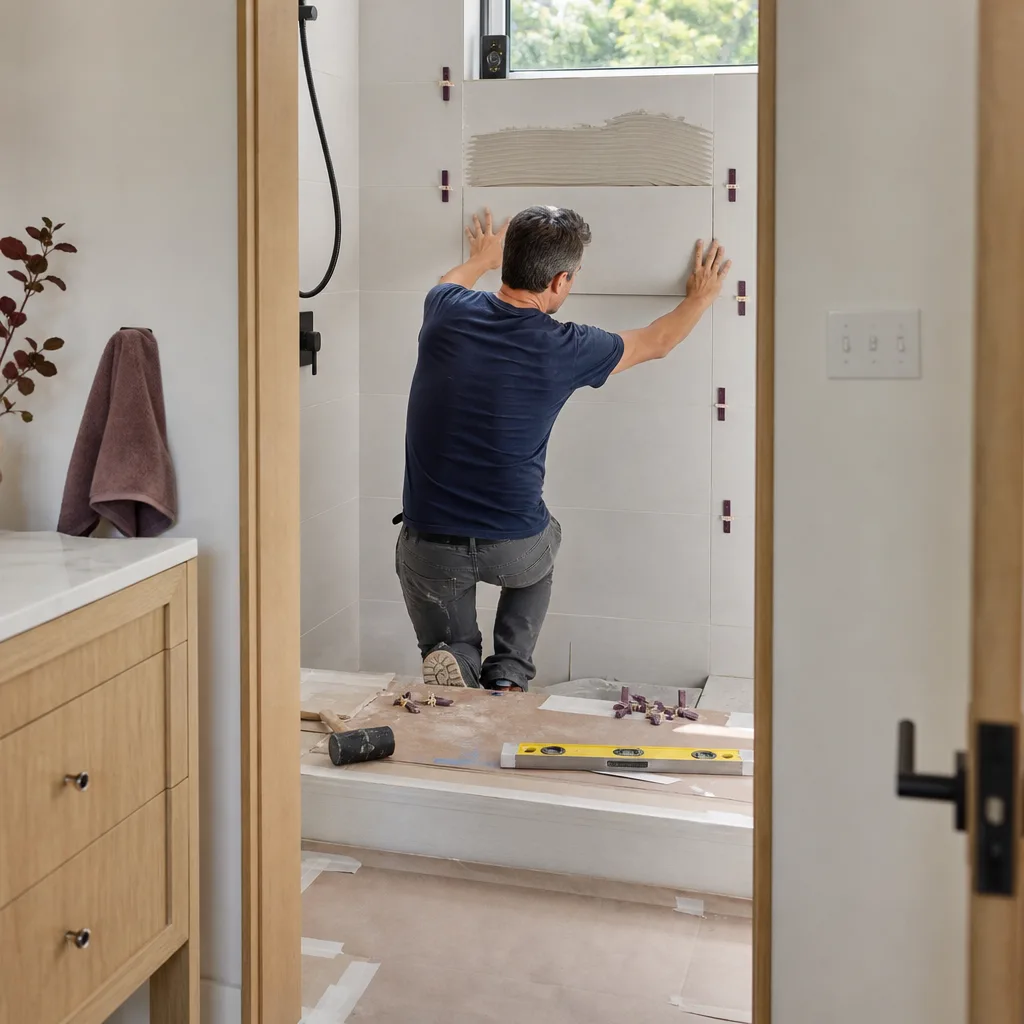
- Tile and finishes. Floor and wall tile, grout, then fixtures and trim.
- Final inspection. Everything visible and functional, signed off.
A crew that tiles before the waterproofing inspection has either skipped the inspection or skipped the membrane. Either way, you’ll find out in a year when the ceiling below the shower stains. Our teams have up to 19 years of experience in this trade, and the discipline is always the same: the inspection gate isn’t bureaucracy, it’s the one checkpoint that proves the water stays where it should.
Why the waterproofing inspection matters more than the tile
Tile is a wear surface, not a water barrier. Water passes through grout joints and sits against whatever’s behind it. If that’s a properly applied membrane, the water drains to the weep holes and leaves. If it’s backer board without a membrane, the water enters the wall assembly and stays. In Homestead’s humidity it doesn’t dry out between uses. It grows.
The callback work we see most often in bathroom remodels isn’t failed tile. It’s failed waterproofing: a shower pan that leaks into the room below, a niche that wicks water into the wall, a bench seat that rots from the inside. Every one of those is traceable to a waterproofing inspection that either didn’t happen or was signed off on a membrane that wasn’t applied correctly. The inspection is not a formality. It’s the moment a third party confirms the work before it’s covered forever.
The reason this matters in South Florida more than in a dry market is that the drying cycle here is short. A wet wall in Phoenix dries out in a day. A wet wall in Homestead stays wet, and the material failure window shortens accordingly. If you take one thing from this guide, take this: ask your contractor when the waterproofing inspection is scheduled, in writing, before tile is ordered.
Common Mistakes to Avoid
- Choosing a layout before checking drain positions. A floor plan picked for the shower look, without knowing whether the drain can be relocated, is a plan that will get expensive at the plumbing stage.
- Skipping the permit to save a few hundred dollars. Unpermitted plumbing shows up at resale, and in Homestead it’s the most common reason a bathroom gets re-done by its second owner.
- Accepting a lumped “plumbing” line. A quote that doesn’t break out rough-in, drain relocation, and concrete restoration separately is a quote that will grow.
- Using greenboard behind a wet area. Greenboard is moisture-resistant, not waterproof, and in our humidity it fails within a few years.
- Letting the tile go down before the waterproofing inspection. Once tile is set, the membrane is unverifiable, and any failure is a tear-out.
- Pricing the finishes first. Vanity, tile, and fixtures are the visible line items, but the plumbing and waterproofing are the ones that determine whether the job lasts.
- Ignoring the vent fan. A bathroom without mechanical ventilation in this climate will fail at the finishes eventually. Make sure the fan is on the scope and wired to the light switch.
When to Call a Professional
Call a licensed professional any time the scope touches plumbing supply or drain lines, electrical circuits, or a shower pan. Those are the three areas where an error is expensive and sometimes dangerous: a mis-routed drain fails under pressure, a mis-wired GFCI circuit is a shock hazard, and a failed waterproofing membrane means tearing out a finished bathroom. Our technicians are background-checked and uniformed, and every visit includes a documented photo record as a standard deliverable, so you know exactly what was found and what was done. Rowan Construction Group Homestead offers free estimates in Homestead. Call (844) 834-4248 to schedule yours.
For a look at the full range of trades we handle, start at our Rowan Construction Group Homestead home page.
See the difference
 Before
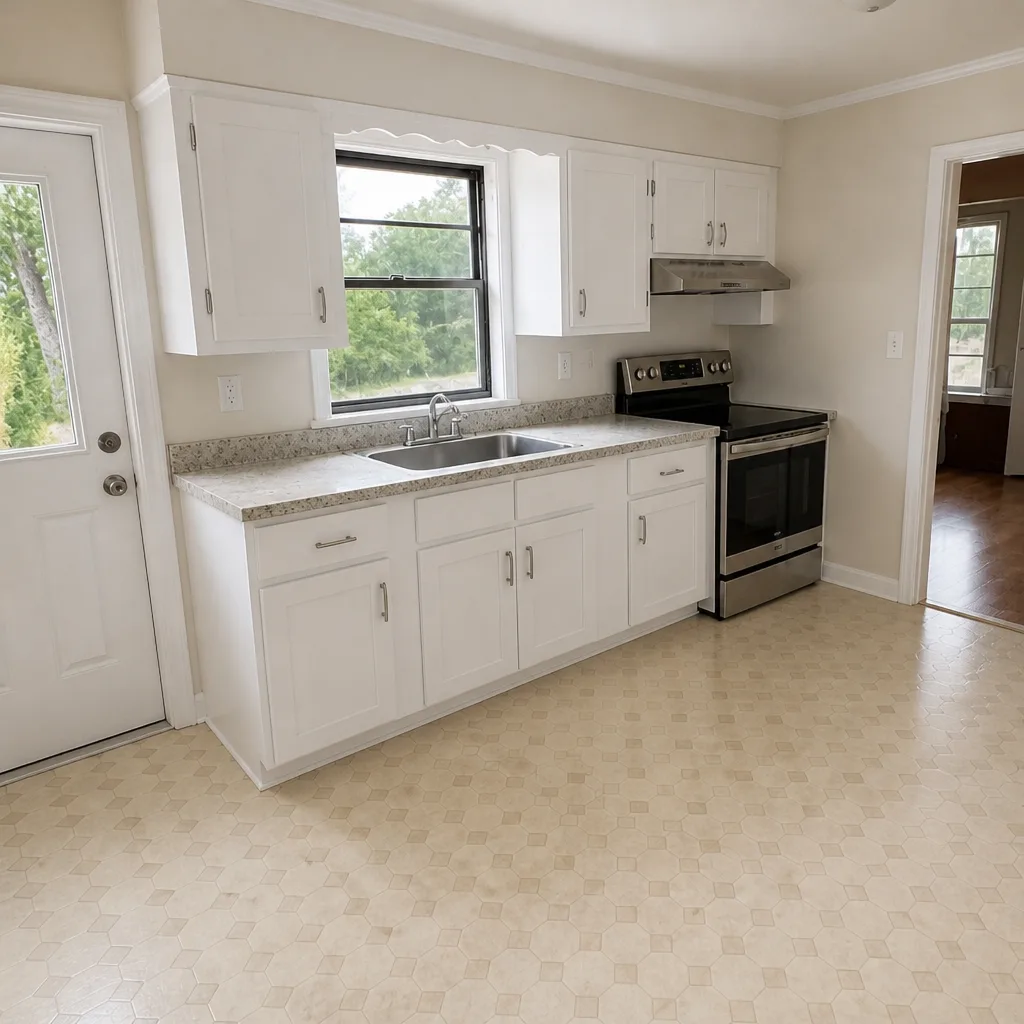 After
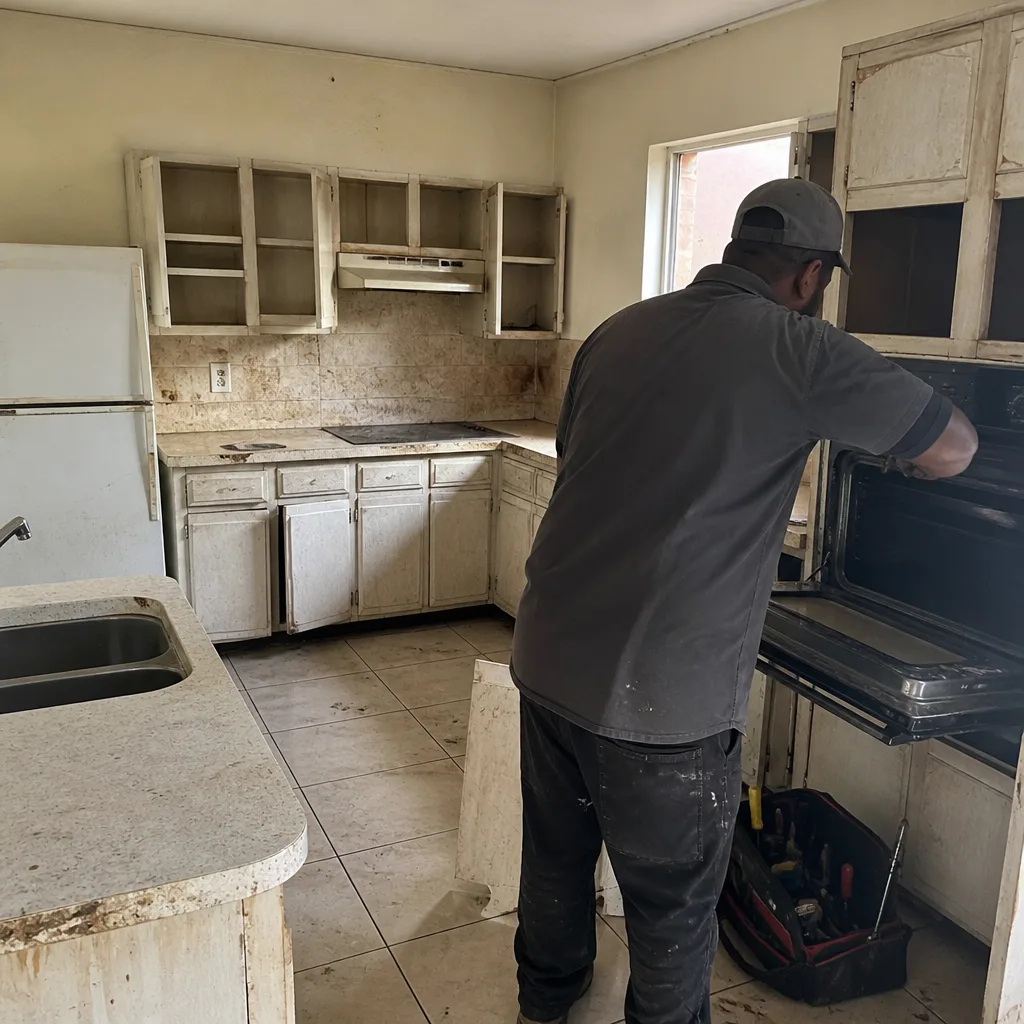 Before
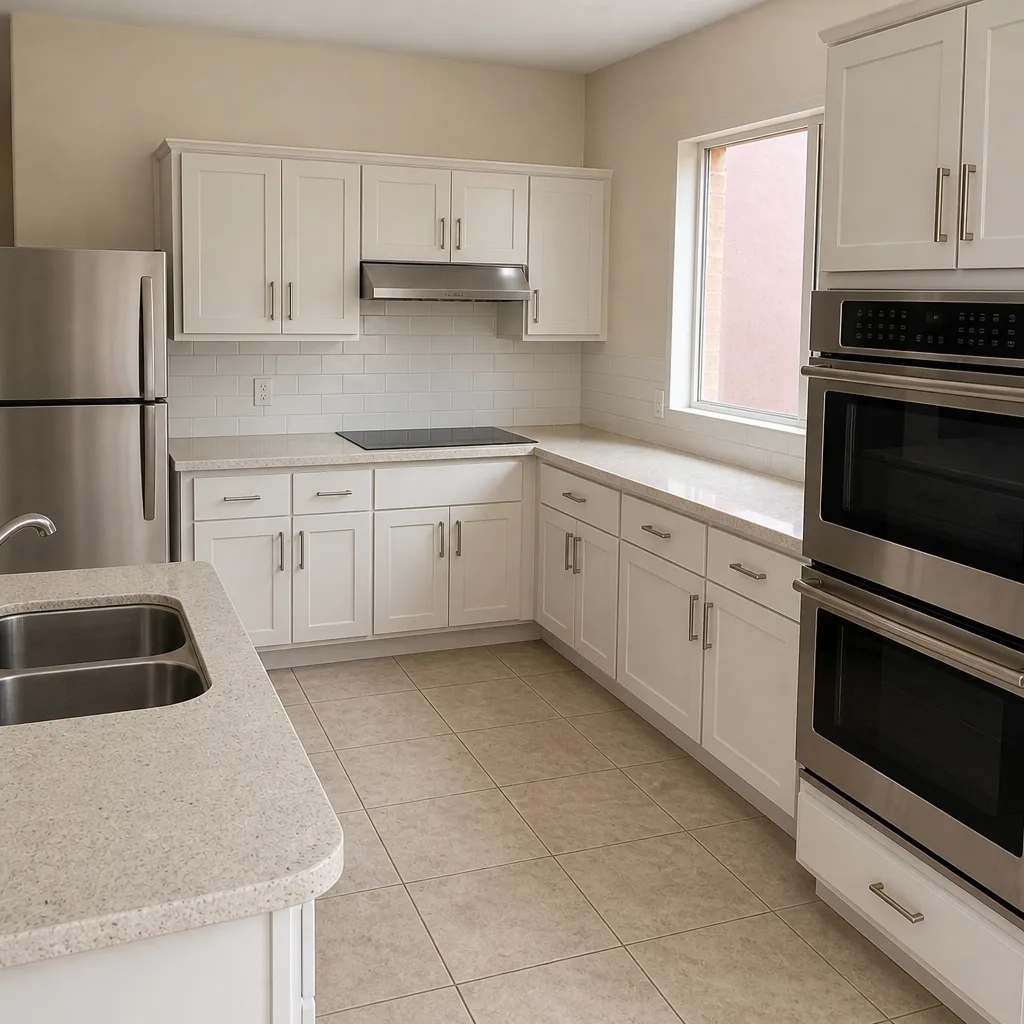 After
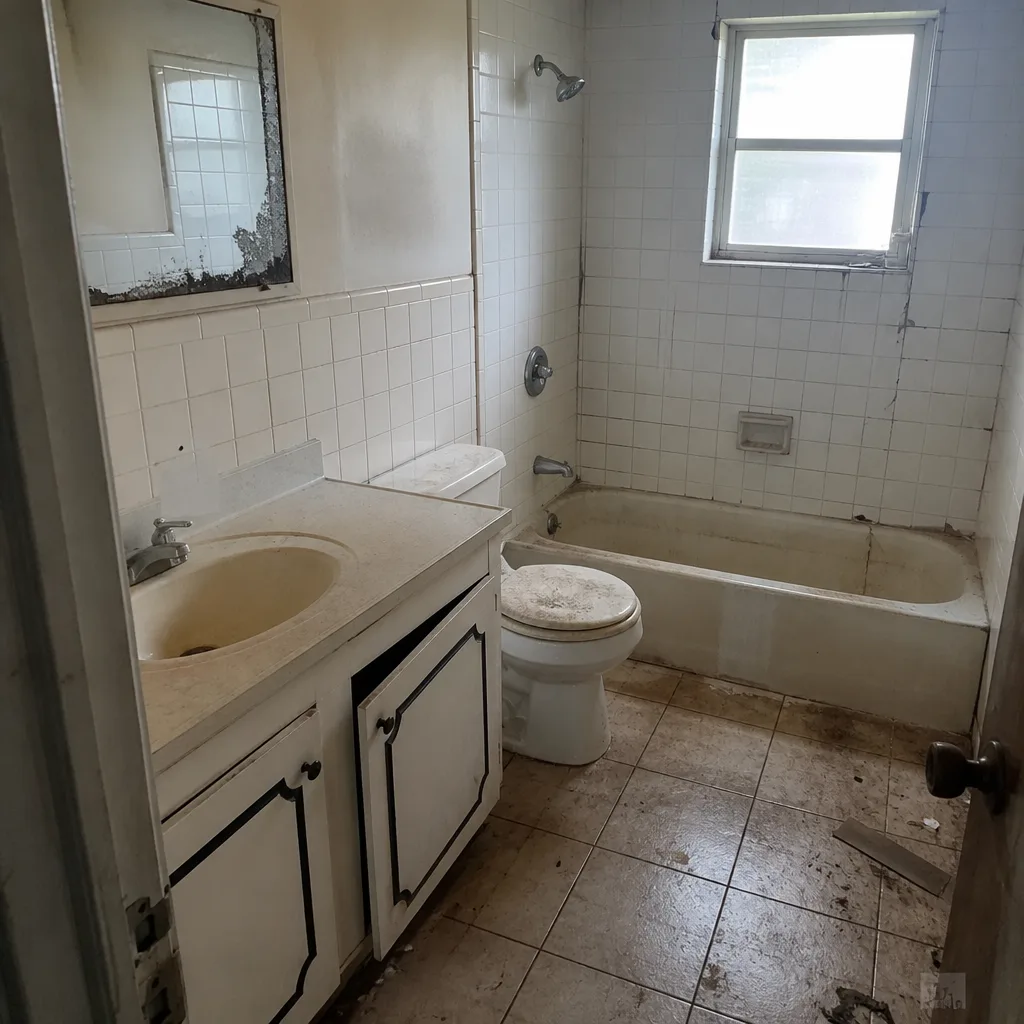 Before
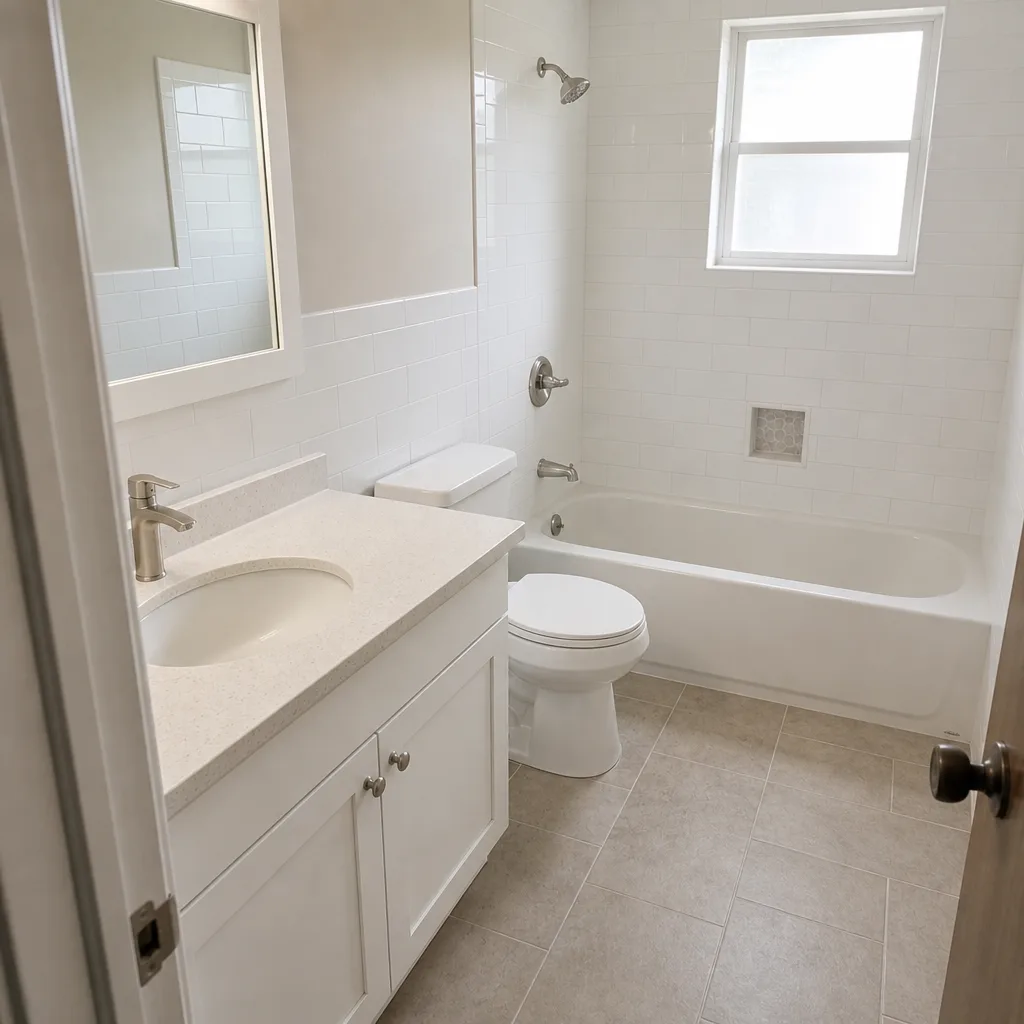 After
Frequently Asked Questions
A full bathroom remodel in Homestead typically costs $14,000 to $32,000, with the number driven mostly by plumbing scope. Keeping fixtures in place keeps you near the low end; moving a toilet or shower drain on a slab adds $800 to $2,200. Call (844) 834-4248 for an exact quote on your project. Estimates are free.
Yes, if the work touches plumbing supply or drain lines, and most remodels do. That means a building permit with a plumbing sub-permit reviewed by Miami-Dade County. Cosmetic-only work generally doesn’t require one. The permit is not optional and it protects you at resale.
It shouldn’t, if the scope was written correctly. Under Clause 1 of the Haven Standard, the price is written before any work starts, and no additional work proceeds without a signed change order. A quote that grows without a written scope change is a quote that wasn’t honest to begin with. Call (844) 834-4248 for a written, line-item estimate.
Most bathroom remodels run four to eight weeks from demolition to final inspection, with drain relocation adding two to four days and permit review adding a few weeks at the front end. The waterproofing inspection is a hard gate, so schedule that step early.
Cementitious or fiber-cement backer board with a liquid-applied or sheet waterproofing membrane over every wet area, epoxy grout, and a moisture-resistant vanity box in plywood or marine-grade plywood. Greenboard behind a shower is the most common wrong choice and it fails here.
Yes. Rowan Construction Group Homestead offers a free second opinion on any written estimate. Bring a competitor’s quote and we’ll review it line by line at no charge, so you can see what’s in the scope and what’s been left out. Call (844) 834-4248 to arrange it.
The Bottom Line
A Homestead bathroom remodel is a plumbing project wearing a finish-project costume. Decide first whether your layout requires drain relocation, because that single question drives $800 to $2,200 and two to four days on a slab floor, and it decides your permit scope. Price the finishes second. Spec the assembly behind the tile with more care than the tile itself, and make sure the waterproofing inspection happens before a single piece of tile is set. Read every quote for what it omits, not just what it totals, and ask when the inspection gates are scheduled. The most reliable cost control available in this market is a layout that keeps fixtures in their existing footprint.
Rowan Construction Group Homestead quotes every bathroom project with a flat written price and a written scope before work begins. Call (844) 834-4248 to schedule your free estimate.
Written by the team at Rowan Construction Group Homestead.