Last updated November 17, 2026


Free written scope consultation - allowances, timeline, and change-order rules on paper before a single trade is scheduled
The Complete Fence Installation Guide for Homestead Homeowners
Orlando and Homestead sit in the same state. They do not sit in the same wind zone. A 6-foot pressure-treated privacy fence built to Florida Building Code in Orlando is routinely red-tagged in Homestead, because Miami-Dade County enforces a 175 mph design wind speed and its own High-Velocity Hurricane Zone rules for post size, embedment depth, concrete footing diameter, and panel fastening. That first post-hole is where the money gets spent or wasted, and nobody can undo it later without starting over. This guide covers what the HVHZ actually demands of a fence in Homestead, what each material costs installed, and how to read your own survey before you sign anything.
Quick Answer
Fence installation in Homestead, FL requires a permit and must meet Miami-Dade High-Velocity Hurricane Zone requirements for a 175 mph design wind speed, which sets minimum post sizes, footing dimensions, and panel attachment methods for every material. Installed costs run roughly $14 – $22 per linear foot for chain-link, $18 – $28 for pressure-treated wood, $25 – $38 for vinyl, and $30 – $45 for aluminum under the HVHZ. The correct first step is reading your property survey, not picking a fence style.
Styles & brands we work with
- Kitchen remodeling
- Bathroom remodeling
- Home additions & ADU
- Roofing
- Windows & doors
- Driveway & pavers
- Fence
Table of Contents
- What the Miami-Dade HVHZ Wind Code Means for Your Fence
- Material-by-Material HVHZ Requirements and Costs
- Fence Cost Comparison for Homestead in 2026 Dollars
- How to Read a Property Survey Before You Get a Fence Quote
- Homestead Setback and Height Rules by Yard Location
- What a Compliant Permit Package Should Contain
- How to Verify Your Permit Was Actually Submitted
- Common Mistakes to Avoid
What the Miami-Dade HVHZ Wind Code Means for Your Fence
Miami-Dade and Broward are the only two Florida counties that operate their own product approval system on top of the Florida Building Code, and fences in those counties fall under the High-Velocity Hurricane Zone provisions whenever they meet the height and solidity thresholds that trigger engineering review. The design wind speed in Homestead is 175 mph. That is the number your contractor must design to, and it changes the physical construction of the fence.
In practice, the HVHZ requirement translates into four things on a solid privacy fence:
- Post size. A 4×4 post that works in Orlando for a 6-foot privacy panel is not acceptable for HVHZ loads on a solid fence. Most engineered details in Miami-Dade call for 4×6 or 6×6 posts on rear-yard privacy runs, with the post notched or routed so the panel sits behind the face of the post rather than bolted to it.
- Embedment depth and footing. You’ll see 8-foot post spacing with a minimum 30-inch embedment and a footing hole that is effectively twice the post diameter or larger, filled with concrete. The exact figure comes from the engineer or the product approval, not from a contractor’s habit.
- Panel fastening. Every fastener type and spacing is specified in the product approval: stainless or hot-dip galvanized, ring-shank nails or structural screws, and a specific count per rail. Fasteners alone are where cheap installs fail inspection.
- Continuous load path. The post, the footing, the rail, and the panel have to work together. A beautifully built panel bolted to an undersized post with three screws is, structurally, a sail on a fencepost.
What that means in Homestead is simpler than it sounds: you can build a beautiful fence that meets code, but only if the design starts from the engineered detail, not the style card. If nobody on the job can tell you what the design wind speed is, you have not found a fence contractor who works in this county.
Material-by-Material HVHZ Requirements and Costs
Materials behave very differently under HVHZ review. Three of the four common fence types have approved product assemblies that a contractor can pull from a manufacturer’s evaluation report. Wood is the exception, because a wood privacy fence is typically assembled from job-site components and needs an engineer’s detail drawing or a design that follows an approved assembly.
Pressure-Treated Wood
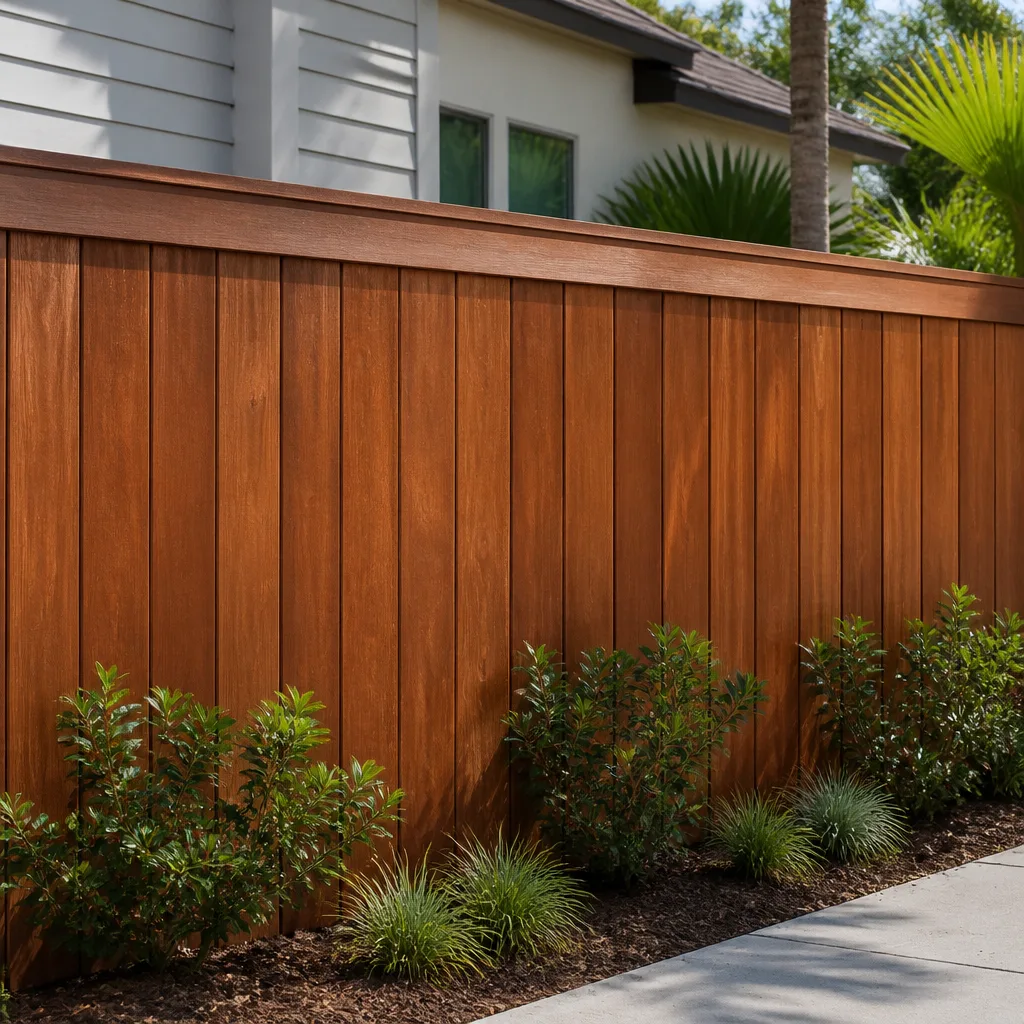
Wood is the most common fence material in Homestead because it’s affordable and reads as a private fence. Under HVHZ, the wood itself is not the issue. The post size, embedment depth, footing, and fastener schedule are. Expect 4×6 or 6×6 posts on a 6-foot privacy fence, hot-dip galvanized fasteners throughout, and an engineered detail. Pressure-treated pine in a south Florida climate takes on moisture and moves constantly, so pick a species and treatment suited to the local humidity and get the post detail right the first time. Installed cost runs about $18 – $28 per linear foot.
Vinyl (PVC) Fence
Much of the vinyl fencing sold in Homestead is sold as an HVHZ-approved system, provided the manufacturer’s Notice of Acceptance or product approval is on the permit. The NAO specifies post spacing, footing diameter, and an internal post insert or reinforcement many homeowners don’t realize is required. An unapproved vinyl panel installed on 4×4 posts with no reinforcement is the most common red-tag in the county. Installed cost runs about $25 – $38 per linear foot.
Aluminum Ornamental Fence
Aluminum picket fencing carries some of the cleanest product approvals because panel and post are engineered together. If you want a fence that passes HVHZ review without significant custom engineering, aluminum is the easiest starting point. It doesn’t provide privacy on its own, and bear in mind a fence line that also acts as a pool barrier has to satisfy the pool safety code as well as the wind code. Installed cost runs about $30 – $45 per linear foot.
Chain-Link
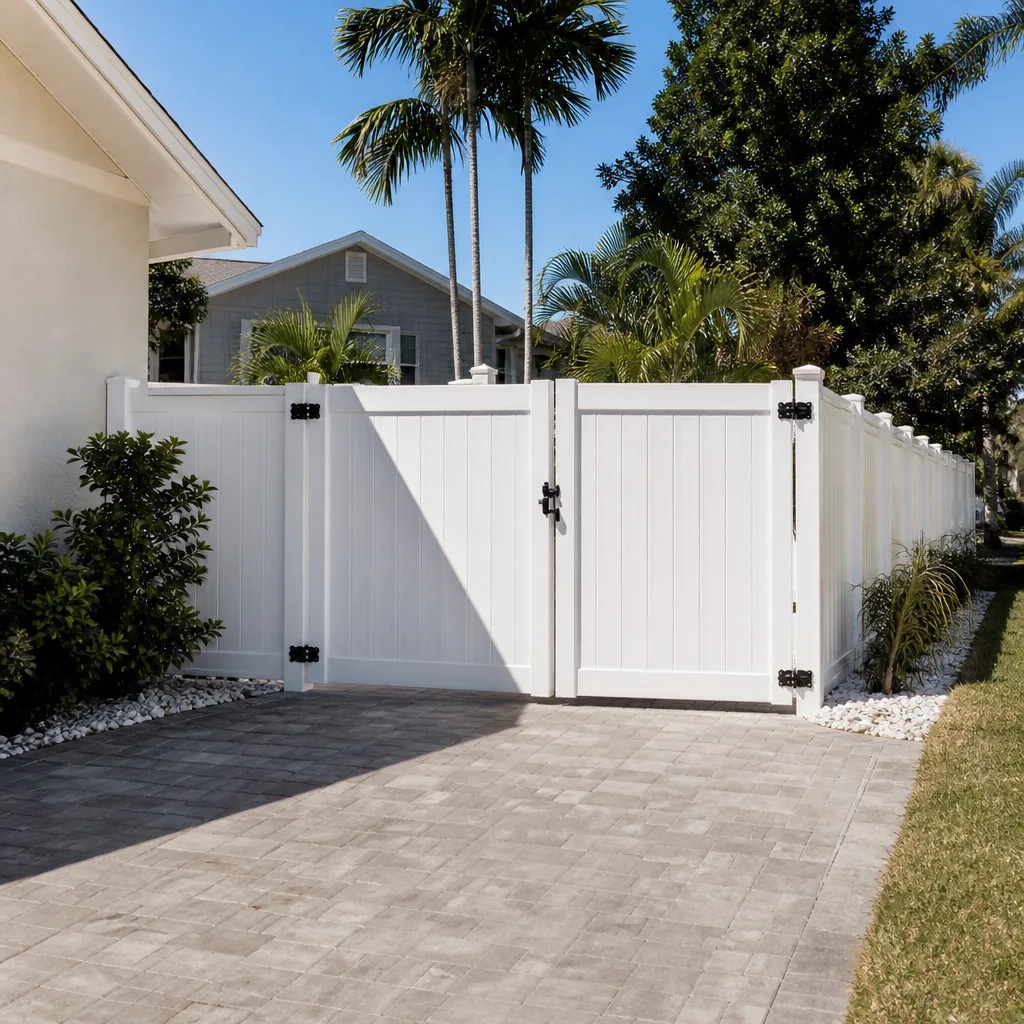
Chain-link survives HVHZ review most easily because mesh lets wind through. Approved chain-link assemblies use specific post spacing, post weight, and top rail sizing, and the mesh gauge matters. It’s the cheapest way to close a property line, and it’s not a privacy fence. Installed cost runs about $14 – $22 per linear foot.
Fence Cost Comparison for Homestead in 2026 Dollars
These are installed costs, meaning permit, materials, labor, and cleanup. They’re a range, not a quote, because post count, gate count, terrain, and whether the run needs engineering all move the number. A 150-foot straight rear run with one gate costs less per foot than a 40-foot corner section with two gates and a slope.
| Material | Installed Cost / Linear Ft | HVHZ Product Approval | Typical Use |
|---|---|---|---|
| Chain-link | $14 – $22 | Approved assemblies available | Property line, no privacy |
| Pressure-treated wood | $18 – $28 | Engineer’s detail needed | 6-ft privacy, side and rear |
| Vinyl (PVC) | $25 – $38 | NOA / product approval required | Privacy, low maintenance |
| Aluminum | $30 – $45 | Usually clean approval | Front yard, pool barrier, decorative |
A few Homestead-specific cost drivers to know about:
- Gate posts. A gate concentrates load and typically requires a heavier post and a deeper footing than the run beside it, and that shows up as a real line item.
- Corner lots. More run, more turns, more posts, and the front-yard setback may force the fence line back.
- Roots and pavers. A run over a limestone or root obstacle near a mature tree, or one that intersects an existing paver patio, changes the footing work. If you’re already planning pavers, our Driveway & Pavers in Homestead work is planned alongside fences on the same site plan so the drainage falls the right way.
- Engineer’s detail. If your wood fence needs a stamped detail, that’s a real cost, and it’s better to see it on the quote than appear as a change order.
Written line-item pricing is our standard, and it’s the one deliverable that lets you compare three quotes on the same terms. Under Clause 1 of the Haven Standard, the price is written before anyone starts.
How to Read a Property Survey Before You Get a Fence Quote
Your survey is the legal drawing the city will use to judge whether your fence is where it belongs, and it outranks local zoning minimums in the places that matter most: easements, utility corridors, and recorded restrictions. Read it before you call anyone, and give it to the contractor before they measure.
Things to look for, in order:
- Easements and right-of-way lines. A utility or drainage easement that crosses your rear line may mean you can’t set posts there, or that the utility can remove your fence to work. If a survey shows an easement, the fence is planned around it, not over it.
- Recorded setbacks and plat restrictions. Your subdivision plat may record a setback deeper than the city code. The plat wins.
- The property corners. Set the fence line relative to the actual monument or pin, not where the neighbor’s existing fence happens to run. Twenty years of a drifted fence line doesn’t make it yours.
- Utility corridors. Call 811 before digging, always, but read the survey to see what’s likely in the ground. A corridor through the yard tells the contractor to plan footings with the utility in mind.
Own a copy of the survey before work starts. If you don’t, most county property appraiser sites in Florida will get you a starting point, and a surveyor can certify a boundary for a fraction of the cost of a fence torn back out.
Homestead Setback and Height Rules by Yard Location
City of Homestead zoning sets the fence height and where the fence line can sit depending on which yard it faces. The rules differentiate front, side, rear, and corner lots because each faces different traffic and sightlines. This is where a fence contractor who works in Homestead every week earns their keep, and where you can check the rules yourself.
- Front yard. Height is more restricted here than a rear run, and the fence line must respect the front setback in the zoning district that applies to your lot, both of which are set out in the City of Homestead Code of Ordinances.
- Side yard. Side fences can run higher than the front, but keep in mind the side yard of a corner lot is treated differently than an interior side yard.
- Rear yard. This is where a 6-foot privacy fence is a normal expectation. Even here, the setback from the rear property line and any drainage easement determine the exact position.
- Corner lot. Two front yards, more visibility at intersections, and a higher scrutiny from the city because sightlines matter. Corner-lot fences are the most likely to require plan revision.
Property line and setback rules vary block to block in a city with a mixture of newer subdivisions and older lots. Before you build, get the zoning district for the parcel from the city and confirm the height and setback that applies. A permit is a check, not a design permission: a plan filed at the wrong height gets rejected regardless of how well it’s built.
What a Compliant Permit Package Should Contain
In Miami-Dade County, a fence this large in a hurricane zone is a permit project. A complete package is three documents plus a cover sheet, and it’s not unusual for the homeowner to submit it themselves. Here’s what belongs in it.
- Site plan. A drawing locating the fence line relative to the survey boundaries, with heights noted and gates indicated. The plan has to match the survey, not an approximation of it.
- Product approvals. The manufacturer’s Notice of Acceptance (NOA) or Florida product approval for the assembly, with the specific design wind speed rating for the material. For wood, this is usually an engineer’s stamped detail instead.
- Footing detail drawing. Post size, embedment depth, footing hole diameter, concrete, and fastener schedule. This is the document a red-tagged fence is missing.
- Affidavit and owner/builder forms where the homeowner is acting as their own contractor, plus the appropriate fee.
A fence contractor who can’t produce all three without an email back-and-forth isn’t up to code on the paperwork end. Ask for the package as a file you keep.
How to Verify Your Permit Was Actually Submitted
A submitted permit isn’t an approved permit. Verify both, and do it yourself rather than assuming.
- Ask for the permit number in writing. Before work starts, not after, and not “we’ll get it later.” A permit application that has been filed and paid is a number.
- Search the county permit portal. Miami-Dade and City of Homestead both maintain public online permit search tools. The permit number and the address should appear with a status.
- Confirm the approved status before excavation. “Contractor says it’s approved” is not approval. If the portal shows a correction notice, there’s a reason.
- Keep the inspection card and the final inspection record. Your fence’s inspection history is part of the property record, and a future buyer will want it.
Documentation is the whole point. We include a documented photo record on every visit as standard, with the condition of the substrate, the embedment, and the inspection record in it, so you’re not reconstructing what happened from memory three years later.
Where Fences Fit in a Homestead Property Plan
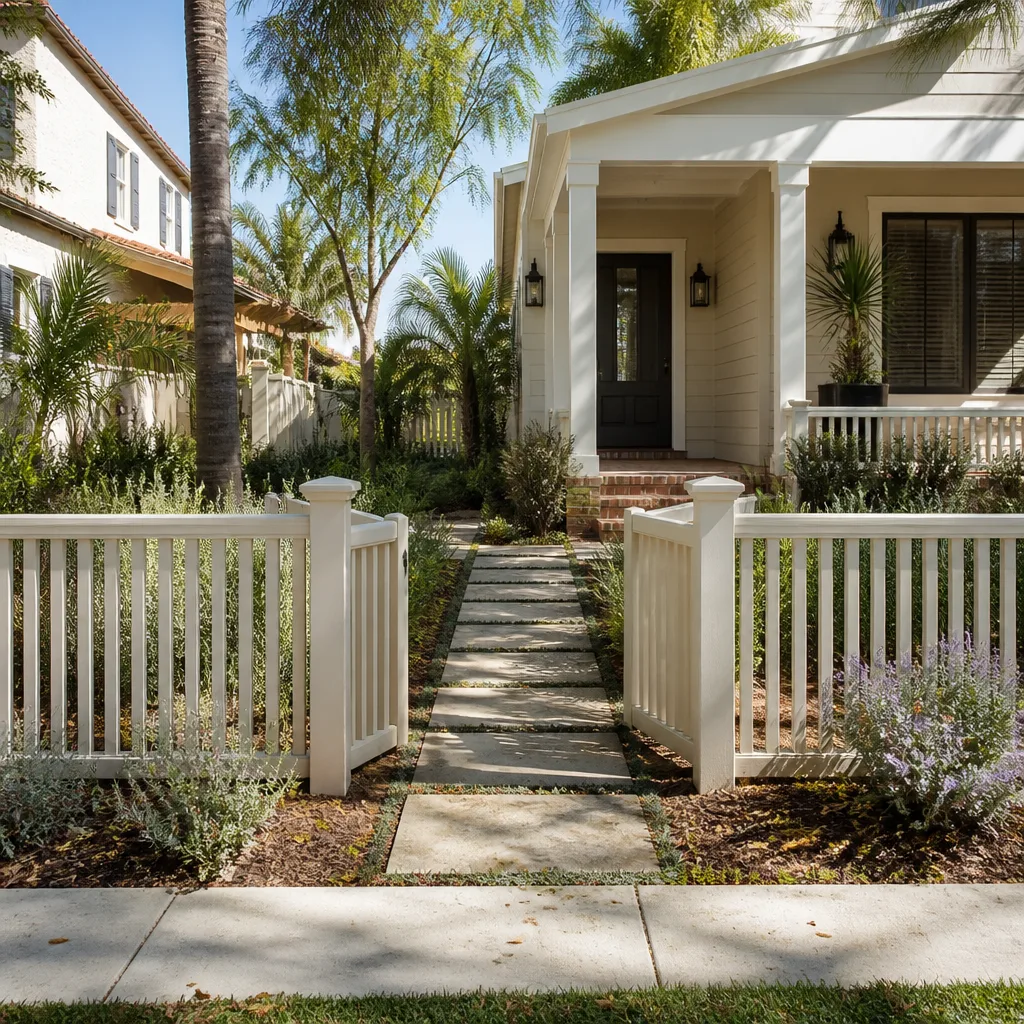
A fence is rarely the only project on a Homestead lot. It’s often planned alongside a driveway, a patio, an addition, or a detached structure, and the order of construction matters. Doing the fence first when an addition is coming usually means the fence has to be moved, or the foundation work has to be built around a fence that’s already in the ground. If a home addition is on the near horizon, look at our Home Additions & ADU in Homestead page and plan the fence around the final footprint rather than the current one.
A pool is the same story. A new pool has a barrier requirement, and the fence line has to be planned with the pool in mind, not fitted afterward. And if the property’s exterior finishes are also being updated, windows and doors can change how the front elevation reads, and a front-yard fence should be designed to match those materials rather than the ones coming out of the house. Our Fence Installation in Homestead page goes deeper into the design side, and the Rowan Construction Group Homestead home page covers the full set of trades if you’re planning several improvements at once.
One honest note on documentation and storm season: a fence that meets HVHZ is more resilient, but insurance coverage depends on your policy. Keep the approved permit, the product approvals, and the photo record in one folder and give your insurer the details of the fence. That record is worth more at claim time than any verbal assurance from anyone.
See the difference
 Before
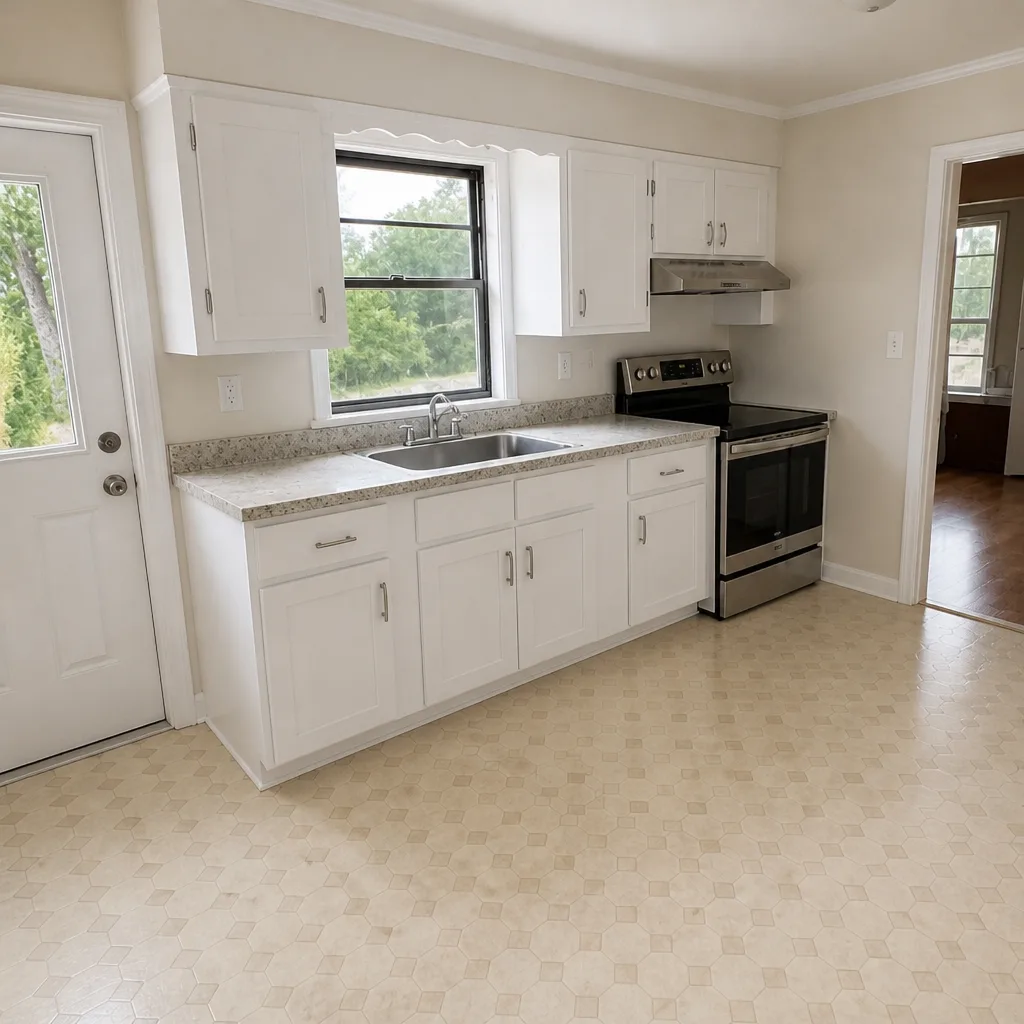 After
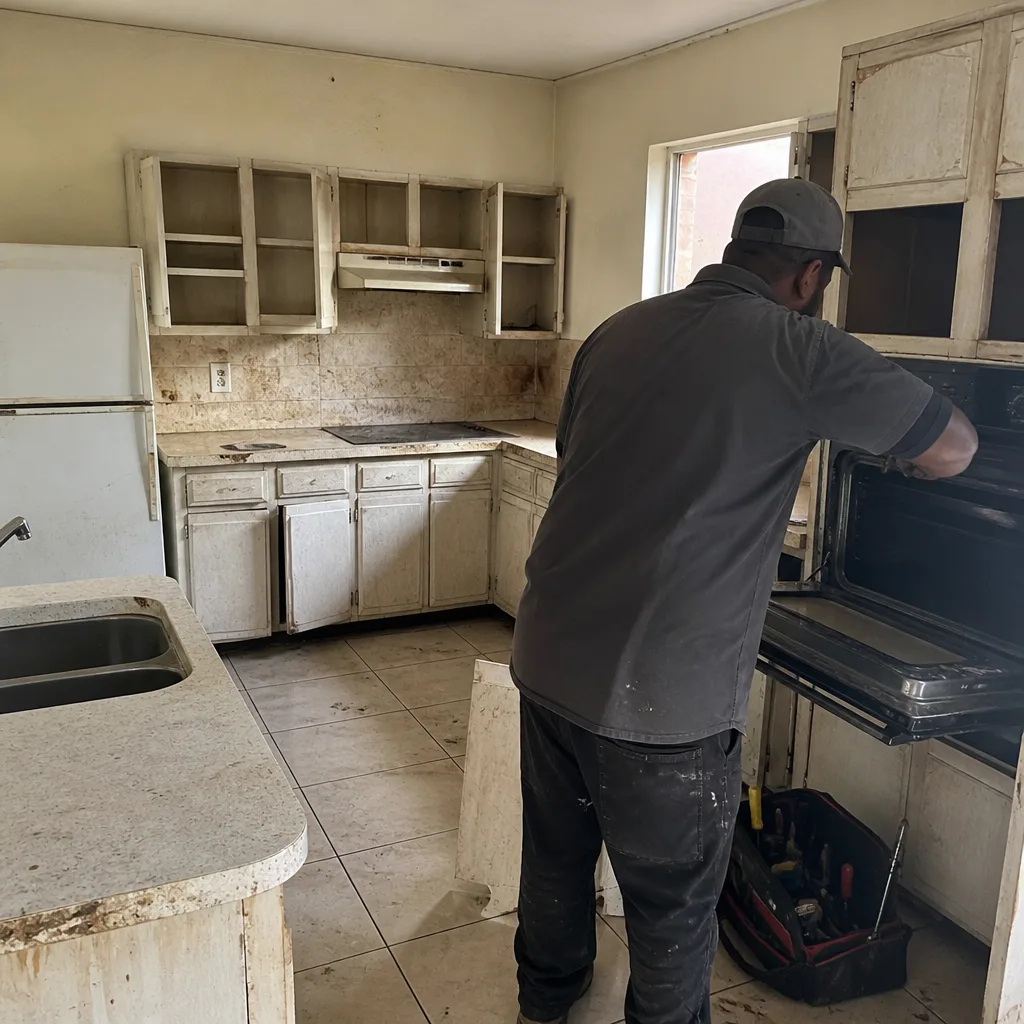 Before
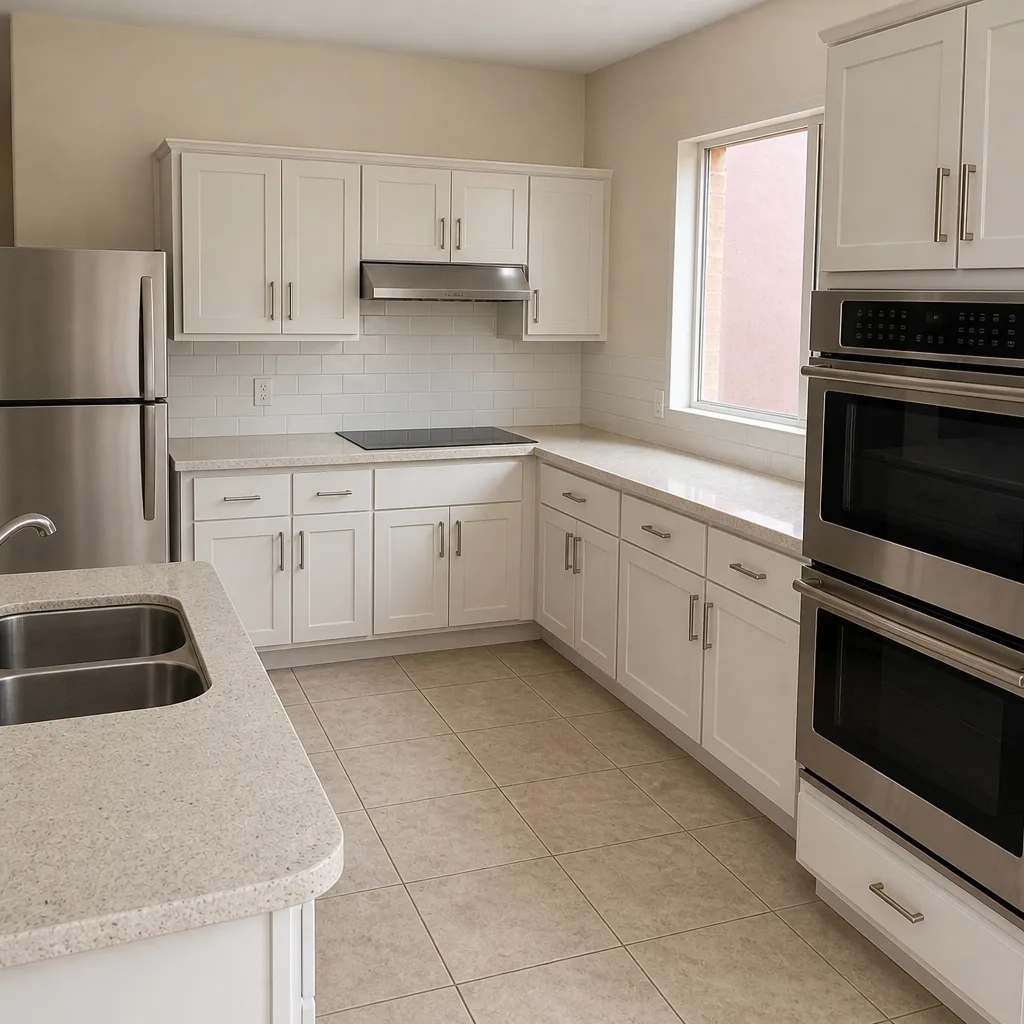 After
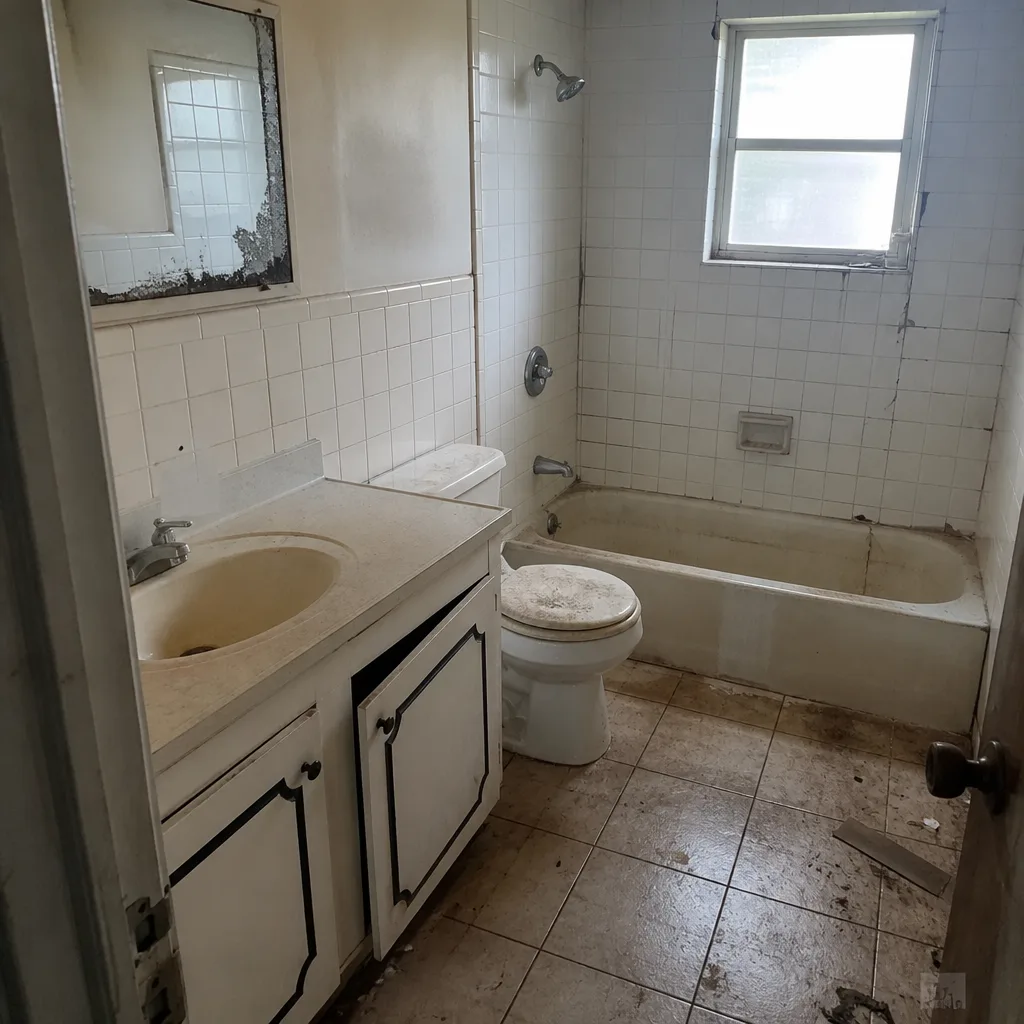 Before
 After
Common Mistakes to Avoid
- Measuring from the wrong line. Setting the fence on the neighbor’s existing fence line instead of the property corners is a Homestead land boundary problem that can mean removing the fence, even if it was permitted. It has to be measured from the survey, not memory.
- Treating the permit as a formality. The plan review and the inspection are the check, but approval isn’t design approval. A fence built at the wrong height on a corner lot can be permitted and still illegal.
- Buying a vinyl panel online and hiring it installed. You need the NOA on the permit, and panels sold without an approval aren’t eligible to be installed here. The cheapest way to buy a vinyl fence is also the fastest way to red-tag.
- Skipping the survey. A fence built over an easement has a very specific kind of regret. In a subdivision with a drainage easement, the fence is the first thing to go when the utility needs access.
- Undersized gates. A gate concentrates load and needs a heavier post and deeper footing. This is one of the most common inspection corrections.
- Fasteners picked from a bucket. HVHZ requirements are specific about fastener type, coating, and spacing. A hand-full of short nails holds until it doesn’t.
- Not reading the survey’s recorded setback. A neighborhood plat restriction deeper than the city code applies. Building to the city minimum when the plat is more restrictive doesn’t cancel the requirement.
When to Call a Professional
A fence with a permit and an approved footing detail is engineered work, and there are moments when the job moves from DIY-adjacent into “get a trained professional.” Any fence in the HVHZ with a solid panel over heights that trigger engineering review. Any gate. Any post footing that has a utility corridor nearby. Any property line where the survey is ambiguous or the neighbor disputes it. Any fence with a pool barrier requirement attached. And any run over a limestone shelf or a root system that changes the footing plan mid-dig. A fence that fails inspection is more expensive than a fence that’s planned correctly the first time. Rowan Construction Group Homestead offers free estimates in Homestead, and we’ll review a competitor’s quote line by line at no charge: call (844) 834-4248 to schedule yours.
Frequently Asked Questions
Yes. Miami-Dade County requires a permit for fence installation, and for most solid fences the submittal has to include a site plan, product approval or engineer’s detail, and a footing detail. Installing without one risks a red tag during inspection and a stop-work order, so submit and get approval before any post is set.
Installed costs run about $14 – $22 per linear foot for chain-link, $18 – $28 for pressure-treated wood, $25 – $38 for vinyl, and $30 – $45 for aluminum in HVHZ-compliant assemblies. A gate, a corner lot, or an engineer’s detail pushes the number higher. Call (844) 834-4248 for an exact written quote – estimates are free.
It changes the post size, embedment depth, footing diameter, and fastener schedule. The 4×4 post with an 18-inch footing that’s common outside Miami-Dade isn’t acceptable for a tall solid panel here. The exact figures come from the product approval or an engineer’s detail, not from a rule of thumb.
Aluminum, chain-link, and most vinyl systems have Florida product approvals or a Notice of Acceptance that specify an approved assembly, and the contractor must build to that document. Wood is usually detailed by an engineer rather than approved as a package.
Florida allows owner-builder permits for a fence on your own primary residence with the required affidavit, and many homeowners do this. Even so, the HVHZ footing detail and inspection don’t change, and an undersized footing is the most common cause of a failed inspection.
It shouldn’t. We deliver a flat written price with a written scope before any work begins, and no change proceeds until a signed change order is in place. That discipline has kept our projects within a few percent of the agreed cost across 4,000-plus jobs. Call (844) 834-4248 for a free written estimate.
The Bottom Line
The fence you want for your Homestead yard and the fence that gets tagged during the first post-hurricane inspection are separated by details you won’t find on a style card: post size, embedment, footing, fasteners, and the product approval. Get the survey first. Get the zoning district, then read the setback and height rules. Get a permit package that includes the site plan and the footing detail. And get a written price before anyone picks up a shovel. Under Clause 1 of the Haven Standard, the price is written before work starts, and the 365-Day Done Right Promise covers the result.
Every fence we quote carries a flat written price with a written scope, a background-checked and uniformed crew, and a documented photo record as a standard deliverable. Bring a competitor’s estimate and we’ll review it line by line at no charge. Call (844) 834-4248 for your free estimate and get the number in writing before anyone sets a post.
Written by the team at Rowan Construction Group Homestead.