Last updated November 17, 2026


Free written scope consultation - allowances, timeline, and change-order rules on paper before a single trade is scheduled
Construction Emergency Preparedness Guide for Homestead Homes
After Hurricane Irma, the average Citizens Property Insurance claim in Miami-Dade took 14 months to settle when the homeowner couldn’t document the age or specification of the damaged roof. Claims with a copy of the original roofing permit and product NOA on file settled in an average of 4 months, according to post-storm claims analysis. The difference was a folder. Not a generator, not a shutter set, not a case of bottled water. A folder with the right paper in it. This guide covers the documents every Homestead homeowner should assemble before a storm, the structural checklist that matters in Miami-Dade’s High-Velocity Hurricane Zone (HVHZ, the code zone covering most of Homestead), and the first-72-hour moves that protect a claim after wind or water gets in.
Quick Answer
Construction emergency preparedness for a Homestead home means five documents in one waterproof folder or cloud backup: current permit history, the roof installation permit with product NOA numbers, impact window and door approval numbers, the current insurance declarations page, and a recent property survey. With those in hand, a storm-damage claim settles faster and with less dispute. Everything else – shutters, the garage door brace, the generator hookup – is operational readiness on top of that paper trail.
Styles & brands we work with
- Kitchen remodeling
- Bathroom remodeling
- Home additions & ADU
- Roofing
- Windows & doors
- Driveway & pavers
- Fence
Table of Contents
- The Five Documents Every Homestead Home Should Have Ready
- The Homestead Structural Pre-Storm Checklist
- Wind Mitigation Inspection vs. Standard Home Inspection
- The First 72 Hours After Wind or Water Damage
- Post-Storm Repair Timeline in Homestead
- How to Avoid Post-Disaster Contractor Fraud
- Common Mistakes to Avoid
- Frequently Asked Questions
The Five Documents Every Homestead Home Should Have Ready
This is the core of preparedness, and it’s the part most Homestead homeowners skip. Insurers, contractors, and adjusters all ask the same question after a storm: what was there before? If you can’t answer with a document, the conversation turns into a negotiation.
Here are the five documents to assemble, and where each one comes from:
- Current permit history. Pull it from Miami-Dade County’s online permit portal (the ePermits system). It shows every permitted improvement on the property with dates, contractor, and inspection results. Save a PDF, not a screenshot. Adjusters accept this; a phone photo of a paper printout, sometimes, but a clean PDF always.
- Roof installation permit with product NOA numbers. The Notice of Acceptance (NOA) is Miami-Dade’s product approval for materials used in the HVHZ. Your roofing permit lists the NOA numbers for the shingles or tile, the underlayment, and the fasteners. Without them, you can’t prove your roof met code at installation time, which is exactly what a claim dispute turns on.
- Impact window and door specifications with Miami-Dade approval numbers. Each opening in your home has a product approval number. The window sticker is long gone, but the permit records and the manufacturer’s NOA list carry the numbers. Keep a copy of both.
- Current homeowner’s insurance declarations page. The front page of your policy. It names your coverage limits, your deductible (including the separate hurricane deductible, which in Florida is often a percentage of dwelling coverage, not a flat dollar figure), and your policy number. Re-save it every renewal; policies change.
- A recent property survey. Usually from your closing packet. It establishes the legal boundary and the footprint of the structure. Useful for fence and addition claims, and for rebuilding disputes if the home is damaged beyond repair.
Keep one paper copy in a waterproof bag or fireproof safe and one digital copy in cloud storage you can reach from a phone. Two locations, one folder, updated at every renewal.
The Homestead Structural Pre-Storm Checklist
Once the paper is in order, the physical checklist is short. Homestead construction has a specific set of weak points, and each one has a specific fix that can be verified.
- Shutter deployment sequence. Deploy in order of wind load priority: first the large glazed openings (sliding doors, picture windows on the windward side), then standard windows, then doors. Panels or roll-down shutters both qualify, but the panels must have their labeled fasteners, not whatever screws are in the garage. If you don’t have the labeled hardware, the panels don’t count.
- Garage door wind brace verification. Most Homestead garage doors installed after 2002 have a horizontal reinforcement kit. Verify the kit is present and the bolts are tight. An unbraced garage door is the single most common point of structural failure in a windstorm because once it goes, the pressure equalizes and the roof lifts.
- Entry door deadbolt engagement. In the HVHZ, code requires specific hardware on outswing doors and some door types. Check that every exterior door’s deadbolt engages at least one inch into the strike plate and that the door has three hinges rated for the door’s weight. A door that rattles in a 40-mph gust is a door that will move in a 120-mph gust.
- Generator connection. Either a transfer switch (permanently wired, isolates the home from the grid) or an interlock kit (installed inside the panel, prevents the main and the generator breaker from both being on). Both are code-compliant; a suicide cord plugged into a dryer outlet is not, and it’s how people die after storms. If you don’t have either, this is a job for a licensed electrician, not a weekend project.
High-tension systems and electrical panels deserve a professional look. We don’t recommend homeowners open the panel to install an interlock themselves. A licensed electrician verifies the panel can accept the kit and pulls the permit.
Wind Mitigation Inspection vs. Standard Home Inspection
A wind mitigation inspection is not a home inspection. A standard home inspection looks at the condition of the whole house – the roof, the HVAC, the plumbing, the electrical – to help a buyer understand what they’re purchasing. A wind mitigation inspection looks at a narrow set of construction features that determine how the home will perform in wind, and it produces a report used to price insurance.
The wind mitigation report documents: roof covering type and age, roof deck attachment (how the sheathing is fastened to the trusses), roof-to-wall connections (the straps or clips), the presence of a secondary water barrier, and the opening protection (impact windows, shutters, or none).
For Citizens Property Insurance policyholders, the wind mitigation report is required to be updated every five years. That’s the practical rule. But the report is also a structural readiness document – it tells you, in code language, which of your home’s defenses are already in place and which are missing. If the report says “opening protection: none,” you now know that your shutters or impact windows are the priority, not a new water heater.
The report typically saves homeowners a meaningful percentage on the wind portion of the premium, but the exact discount depends on your insurer and the features found. A current report is the only way to claim it. If you’re considering roofing work, ask the roofer for the deck attachment details during the quote so the next inspection records them.
The First 72 Hours After Wind or Water Damage
The first three days decide how the claim goes. Here’s the order of operations.
- Photograph before you touch anything. Wide shots of every affected room, then close shots of the damage. Include the time-stamped phone photos, which are admissible for most claims. Photograph the exterior before you start cleanup – the tarp goes up second, not first.
- Notify your insurer in writing. A phone call is fine, but confirm it in writing (email or the insurer’s portal) with a short description of the damage. That creates a documented loss date.
- Emergency tarping that preserves coverage. Blue poly tarps are permitted as a temporary emergency measure in many cases, but they do not meet Miami-Dade’s emergency repair requirements in all circumstances and they do not count as a permanent repair. The tarp is to keep water out while the adjuster arrives. Keep the receipts for any materials and any emergency labor – you’ll submit them.
- Do not sign a contractor’s “assignment of benefits” (AOB) form. An AOB transfers your claim rights to the contractor, and Florida law has tightened the rules on them in recent years for good reason. Sign a work authorization only for the scope you’ve agreed to and only after you’ve verified the contractor’s license.
- Keep the damaged materials until the adjuster has seen them. This is the part that hurts – the wet drywall, the ruined flooring – but bag it and stage it in the garage rather than hauling it to the curb. Adjusters document the loss; once it’s gone, the loss is harder to prove.
If the roof is actively leaking, a reputable contractor can tarp it for you while you handle the insurer. Call (844) 834-4248 and we’ll walk you through the sequence. Emergency tarping is a genuine speed situation, unlike planned construction.
Post-Storm Repair Timeline in Homestead
After a named storm, the repair timeline stretches. Expect permit review to take 6 to 10 weeks at Miami-Dade for roof replacements and structural repairs, because the county’s building department sees a surge of applications at once. Smaller repairs sometimes move faster under emergency permitting, but the safe assumption is a slower process.
Contractor availability is the second constraint. Good crews book out for months after a major storm, and the ones available immediately are often the ones you should ask harder questions of. Our advice: get the permit application moving while you’re waiting on the adjuster’s estimate, and get the contractor’s written scope and price in hand before you commit.
A realistic sequence looks like this:
- Days 1-3: Document, notify insurer, tarp if needed.
- Days 3-14: Adjuster inspection, written estimate, contractor quotes.
- Weeks 2-6: Permit application submitted, plans if required.
- Weeks 6-16: Permit review, contractor scheduling, materials ordered (materials can also be delayed post-storm).
- Weeks 16+: Construction, inspections, closeout.
If your project involves a significant addition or rebuild rather than a straight repair, the pre-storm documentation you assembled is exactly what the design and permitting team will need. Our page on Home Additions & ADU in Homestead covers what a permitted addition looks like from the inside of the process. If your damage is exterior, the Driveway & Pavers in Homestead guide covers paver and concrete repair, and if a fence came down, the Fence Installation in Homestead page explains wind-rated fence construction. All of it starts from the same principle: the price is written down before anyone starts.
How to Avoid Post-Disaster Contractor Fraud
Post-disaster fraud is a predictable pattern, and the first filter takes two minutes.
Check the license with the Florida DBPR. The Department of Business and Professional Regulation maintains a public license lookup. Search the contractor’s name and the license number on the truck. If the number doesn’t return a qualifying certified or registered contractor, walk away. This is the single most effective filter and it costs nothing.
Beyond the DBPR check, watch for:
- Door-to-door canvassing after a storm. Legitimate contractors may do this; fraudulent ones rely on it. The legitimate ones still pass the DBPR check.
- Requiring a large deposit up front. Florida limits how much a contractor can take as a deposit on most residential work, and reputable contractors work with a written scope and a payment schedule tied to milestones.
- Any pressure to sign an AOB or a blank work authorization. Both transfer control. Don’t.
- Quotes given verbally, or handshake pricing. Under our Haven Standard Clause 1, a written price is delivered before any work starts, on every trade. That’s the standard we hold ourselves to, and it’s the standard we’d suggest you hold any contractor to – including our competitors. If they won’t write it down, ask why.
- Vanity credentials. “Licensed, bonded, insured” is fine, but the license number is what makes it real. Ask for it and check it.
If you have a written estimate from a competitor and want a second set of eyes, Rowan Construction Group offers a free second opinion on any written estimate. Line by line, no charge. That’s our standing offer, not a stunt.
Common Mistakes to Avoid
- Keeping the paperwork in a filing cabinet, not a cloud folder. The whole point of a document set is that you can reach it when the power is out and the house is damaged. Cloud storage solves this; a drawer doesn’t.
- Assuming fresh shutters are enough without the labeled fasteners. We’ve seen Homestead homes with good panels stored in the garage and a coffee can of mismatched screws. Wind tests are done on specific fastener and panel combinations. Without the labeled hardware, the panel is not the rated system.
- Opening a claim before you’ve photographed the damage. A frantic call to the insurer that starts before the photos means the first record of the loss is a voice memo, not a clear image. Photograph first.
- Letting a contractor start cleanup without a signed scope and price. Cleanup is legitimate work. It still needs a written scope. On our side, no work proceeds on a change until the change order is signed – that discipline exists because the disputes start when the price and scope aren’t written.
- Skipping the wind mitigation report update. Citizens policyholders are required to refresh every five years. A lapsed report can cost you on premium and leave you without a current record of your home’s structural features at claim time.
- Treating the survey as an optional document. It’s the baseline for property-boundary claims, which after a storm can include fence disputes, neighbor tree damage, and structural setbacks. If you can’t find it, your county property appraiser’s site often has a copy; otherwise, your title company or closing packet will.
- Hiring from the first flyer taped to the mailbox. The DBPR check takes two minutes. The flyer that skips it takes fifty.
See the difference
 Before
 After
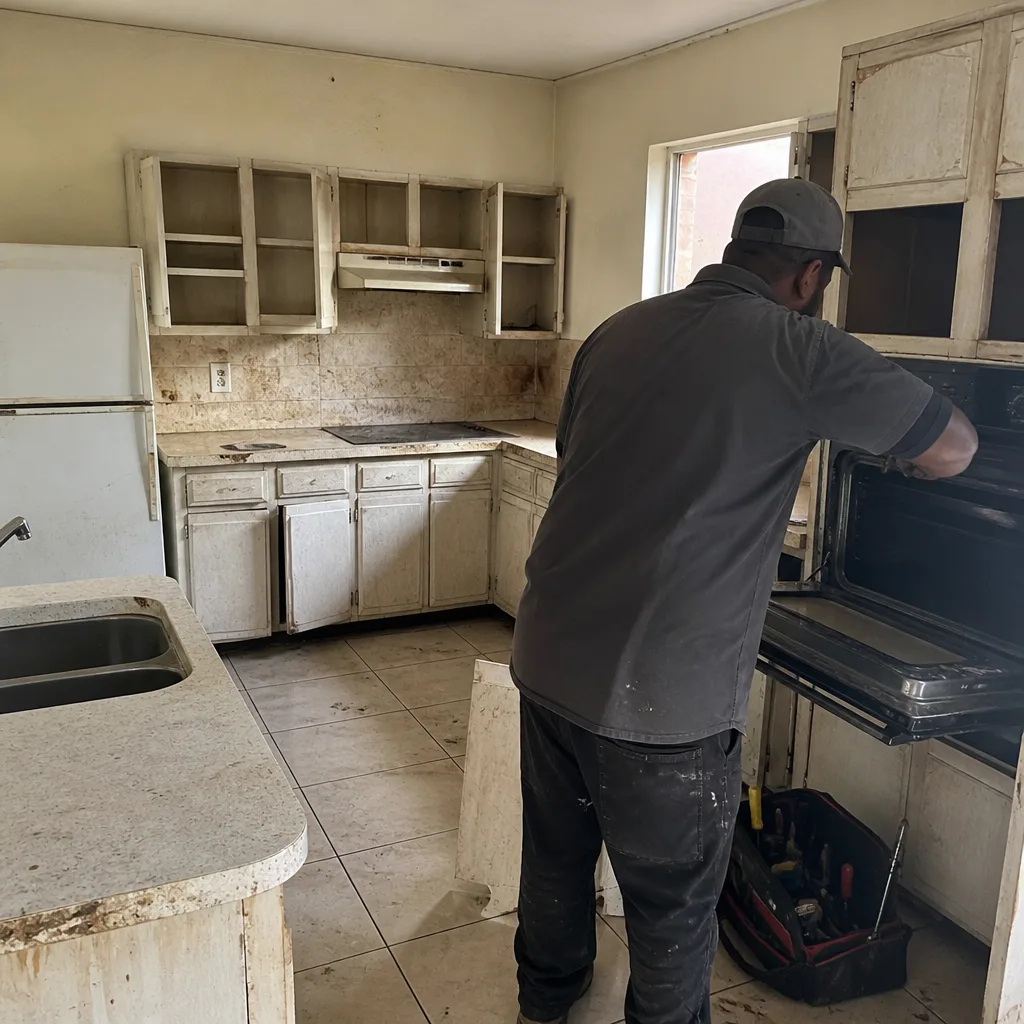 Before
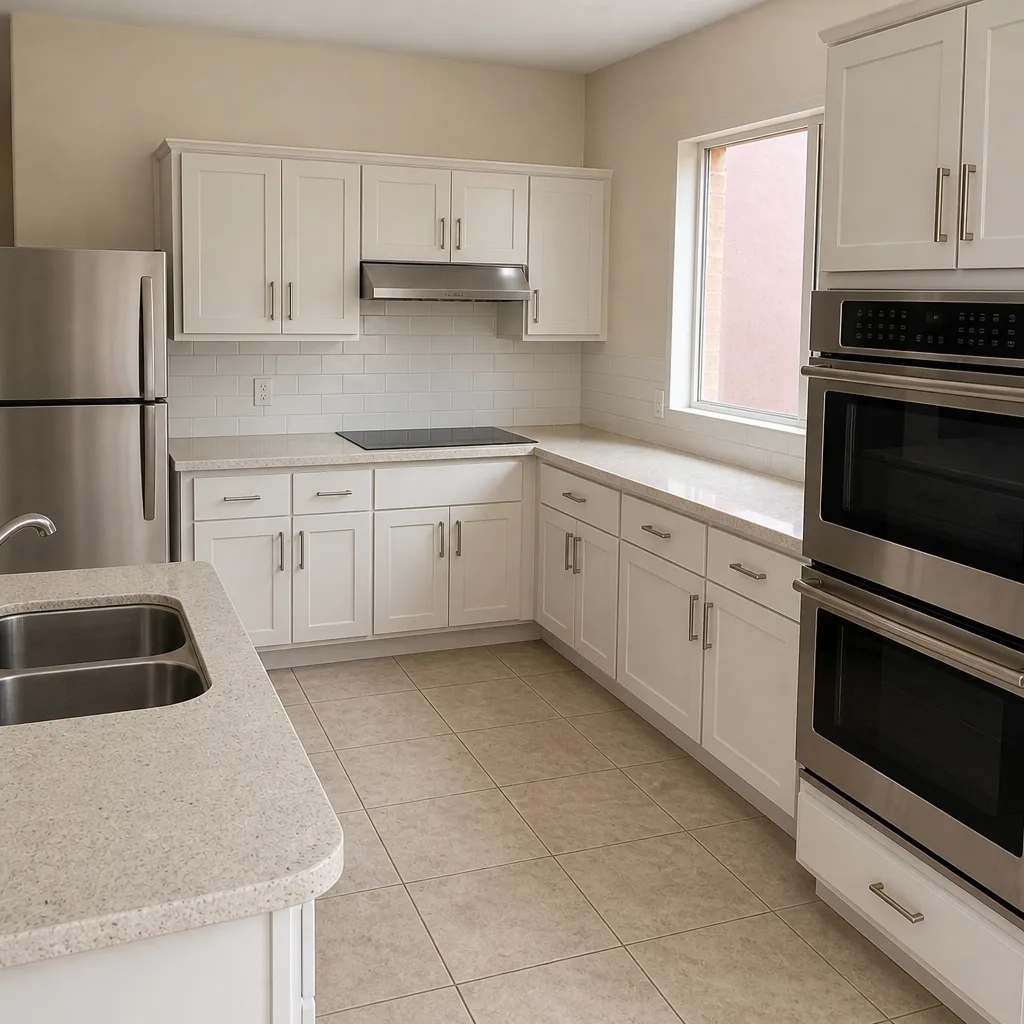 After
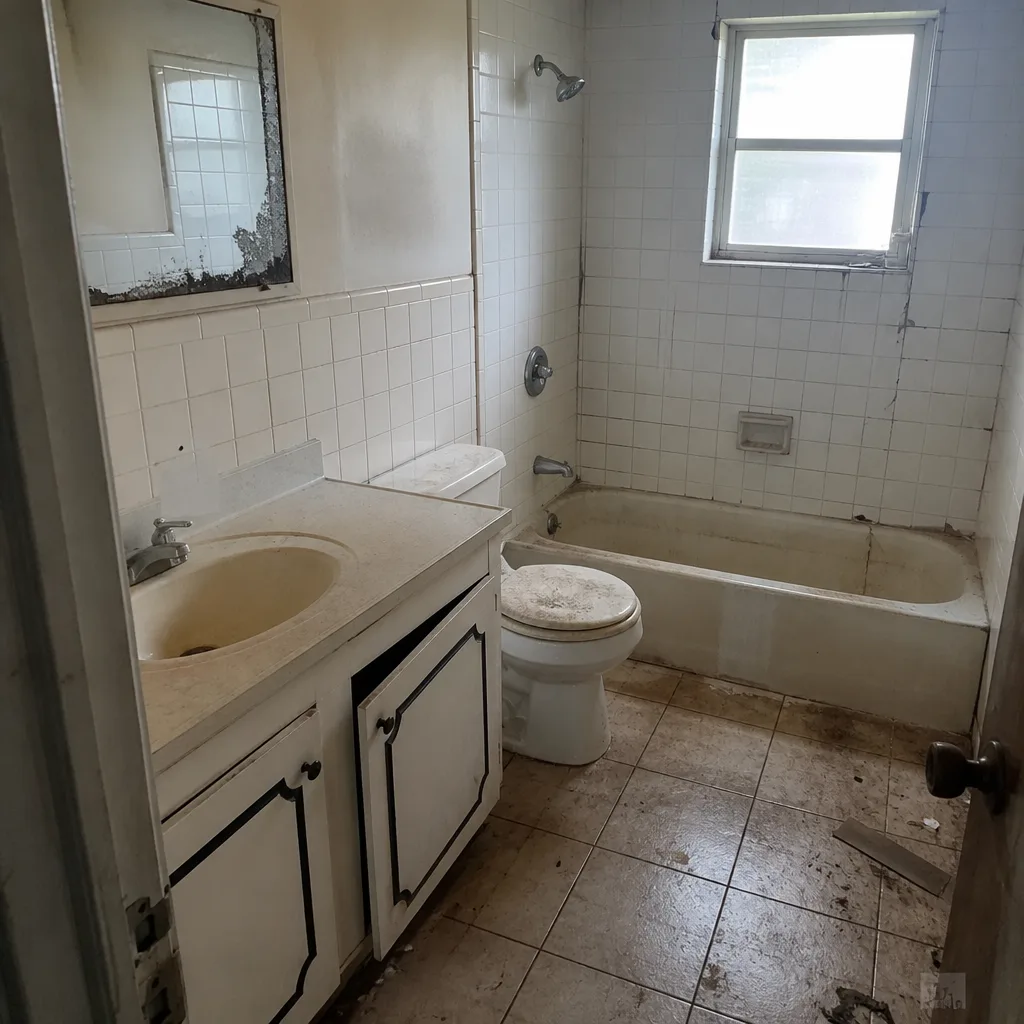 Before
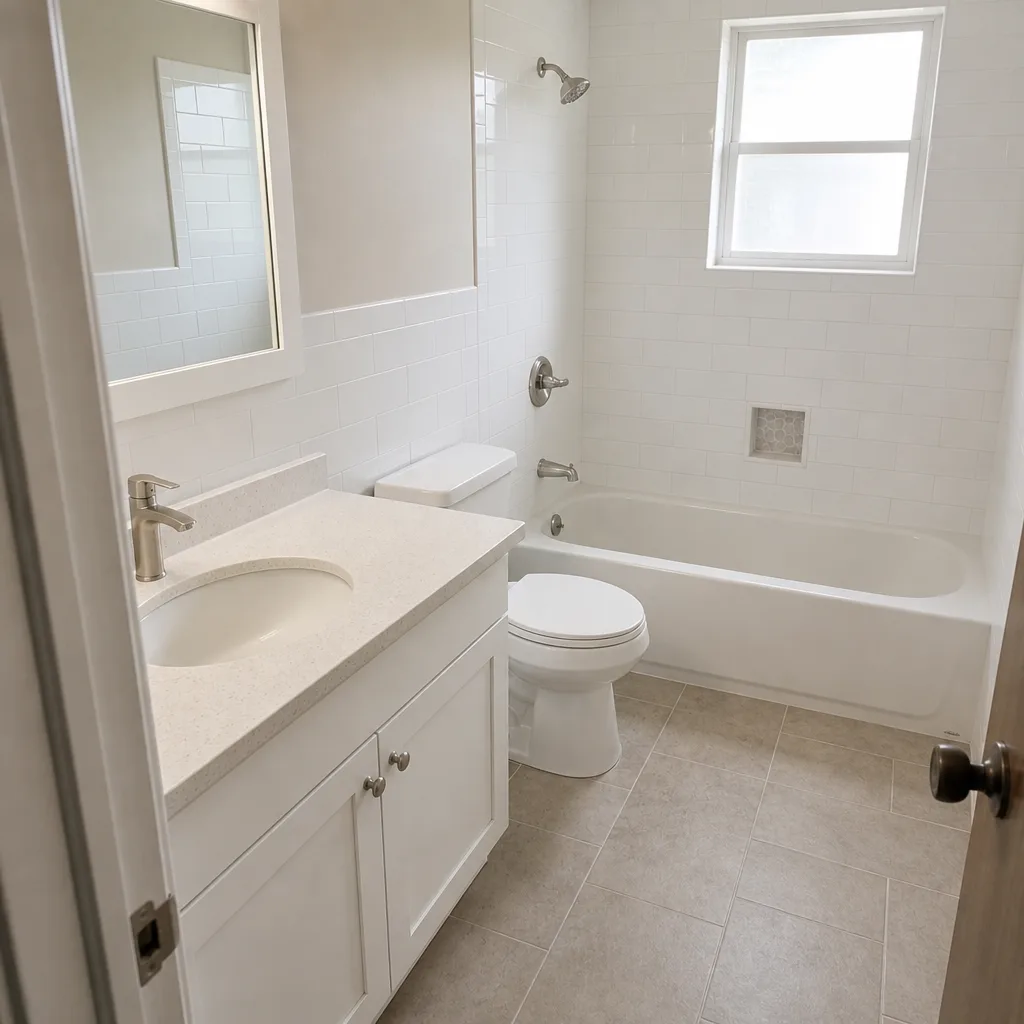 After
When to Call a Professional

Some problems are genuinely DIY-shaped. Repainting a soffit, replacing a section of fence picket, re-caulking a window. Others are not. Call a professional when a wind event has compromised the roof sheathing, when the garage door brace is missing or the panel is not rated for your door, when the generator connection requires a transfer switch or interlock kit (that’s an electrical permit job), when water has reached the wall cavity behind your drywall, or when a repair is going to be submitted to insurance and requires documentation. Roof leaks after a named storm qualify for emergency tarping – that’s the one place speed matters. For everything else, the value is a written scope and price before work starts. Rowan Construction Group Homestead offers free estimates in Homestead – call (844) 834-4248.
Frequently Asked Questions
Claims with complete documentation settle in about 4 months on average; claims without it can take 14 months. The difference is whether you can produce the roofing permit with NOA numbers, the insurance declarations page, and clean damage photos. Start with the folder, then the tarp.
You need a wind mitigation inspection for insurance pricing and structural readiness, and a standard home inspection when you buy or sell. They document different things. For Citizens policyholders, the wind mitigation report should be refreshed every five years. Call (844) 834-4248 if you want help reading one before you order a new one.
You can install panels that are pre-approved for the HVHZ if they’re the correct product and the permit is pulled, but many homeowners skip the permit and lose the rated-system benefit. Anything involving dedicated hardware, roll-down systems, or code-required door hardware is a professional job. The value of the shutter is in the approval number, and that number lives in the paperwork.
Yes, most roof repairs in Miami-Dade require a permit, including replacements and many substantial repairs. Emergency tarping is the exception. The permit is also the document your next claim depends on – it’s what proves the roof’s age and specification. Call (844) 834-4248 for a written scope that includes the permit.
Coverage typically turns on damage and the policy, not the report. What the report affects is your premium and the strength of your documentation at claim time. The report isn’t a condition of coverage, but it is a document that helps any dispute over roof age or specification go your way. Keep it current.
An assignment of benefits transfers your claim rights to the contractor; a work authorization only authorizes the specific scoped work. Sign the second, not the first. Florida has tightened AOB rules in recent years, and the safest posture is a written scope, a written price, and a signature only on the work you’ve agreed to.
The Bottom Line
Preparedness in Homestead is a paper problem before it’s a hardware problem. The five documents – permit history, roof permit with NOAs, impact-opening approvals, insurance declarations, and the survey – sit in one folder you can reach from a phone. The pre-storm checklist turns those documents into a plan: shutters in the right sequence, garage door braced, doors seating, generator connected to code. The first 72 hours after a storm are a documentation exercise: photos, a written claim notice, and a tarp that meets the local standard. If a repair is in your future, get the written price and the permit. That’s what the file you’ve built is for, and what makes the difference when the next storm comes through. For a free estimate on any repair or rebuild, call Rowan Construction Group at (844) 834-4248, or start at our Rowan Construction Group Homestead home.
Written by the team at Rowan Construction Group Homestead.