Last updated November 17, 2026





Free written scope consultation - allowances, timeline, and change-order rules on paper before a single trade is scheduled
Bathroom Remodeling Warning Signs Every Homeowner Should Know
By the time you see a water stain on the ceiling below a bathroom, the subfloor has usually been wet for 6 to 18 months. The warning sign you missed was a grout joint that started feeling soft underfoot a year earlier. Most homeowners are told to watch for water stains, but by then the damage is done and the repair bill has already doubled. The real early indicators are quieter: how your grout behaves, whether your bathroom door still latches, and what your exhaust fan actually moves. This guide covers the pre-visible signs of waterproofing failure, what a 60-second tap test reveals, and how Homestead’s water quality accelerates fixture wear.
Quick Answer
Waterproofing failure in a bathroom shows five early signs long before a leak reaches the ceiling: tile that flexes or feels soft underfoot, grout that darkens at the floor perimeter, a musty smell that only appears after showering, caulk pulling away at the tub-to-floor joint, and a door that stops latching cleanly as the subfloor swells. Catch these in time and you’re looking at $180 to $600 in repairs. Miss them and you’re looking at $3,500 to $9,000 for subfloor and joist replacement.
Styles & brands we work with
- Kitchen remodeling
- Bathroom remodeling
- Home additions & ADU
- Roofing
- Windows & doors
- Driveway & pavers
- Fence
Table of Contents
- The Five Pre-Visible Warning Signs of Waterproofing Failure
- How to Do a 60-Second Tap Test on Your Tile
- Homestead Water Quality and Fixture Failure
- What a Real Scope Inspection Shows That a Visual Estimate Misses
- Cosmetic vs. Structural: What to Watch and What to Fix Now
- Repair Cost Ranges by Warning Sign
- What Documentation a Contractor Should Hand You
- Common Mistakes to Avoid
The Five Pre-Visible Warning Signs of Waterproofing Failure
Waterproofing failures don’t announce themselves. In our experience, they build slowly behind tile and under thresholds for months before anything shows on a surface you can see. Watch for these five signs, in this order of reliability.
- Soft or flexing tile. Step on a tile and feel a slight give. That’s not normal. Tile should sit on a fully bonded thinset bed over a stable substrate. Any movement means the bond has failed, water is getting behind the tile, and the substrate is likely wet.
- Grout darkening at the floor perimeter. Grout near the walls and the shower curb that reads a shade darker than field grout, even days after cleaning, means moisture is wicking up from below. Grout is porous. It pulls water like a wick, and dark grout lines are the visible end of a wicking path.
- Musty smell, but only after showering. A musty smell that appears 20 to 30 minutes after a shower and clears by morning means moisture is trapped in the wall cavity or substrate. The smell is mold growing in a wet cavity that dries slowly.
- Caulk pulling away at the tub-to-floor joint. The horizontal caulk bead where the tub meets the floor tile pulls away in short sections. That’s a joint moving under weight, and it opens a direct path for water into the subfloor.
- Door that stops latching cleanly. A bathroom door that starts to stick, scrapes at the bottom, or won’t latch without a shoulder means the floor is swelling. A wood subfloor gains thickness as it absorbs water, and the door tells you first.
Any one of these signs is worth a closer look. Two or more together, especially in a bathroom over a finished ceiling, mean it’s time to open the wall or floor and see what’s actually going on. Homestead homes built in the 1990s and 2000s often have original cement board and mastic, and those assemblies fail at predictable intervals.
How to Do a 60-Second Tap Test on Your Tile
The tap test is the fastest, cheapest diagnostic a homeowner can do. It takes a minute and a plastic-handled screwdriver.
- Wait for a dry floor. Test on a dry tile surface, so a wet thumbprint doesn’t confuse you.
- Use the handle end of a screwdriver. Not a hammer. Tap with the plastic or wood handle, not the metal end.
- Tap in a grid. Walk the floor or wall in a 12-inch grid, tapping each tile once. Vary your rhythm so you don’t get lulled.
- Listen for the difference. A well-bonded tile gives a crisp, high “tick.” A hollow spot gives a dull “thud,” like tapping on a cardboard box.
- Mark the hollow spots with painter’s tape. Don’t use a marker directly on the tile unless you plan to seal it.
A hollow spot means the tile has lost adhesion to the substrate. One or two hollow tiles at the edge of a floor are usually a minor installation defect. A cluster of hollow tiles, especially in a shower or around a toilet, points to water intrusion into the substrate. In our experience, hollow tile around a shower drain is the single most reliable indicator that the shower pan’s waterproofing membrane has failed. If you find that, stop the tap test and get a scope inspection. The membrane is a bonded sheet of waterproofing material (usually a liquid-applied or sheet material under the tile), and once it’s compromised, water sits in the pan instead of draining. That’s a $2,800 to $6,500 repair if caught early, and double that if the joists go.
Homestead Water Quality and Fixture Failure
Bathroom failures in Homestead look different from bathroom failures in a soft-water city. Homestead’s municipal water runs hard, with mineral content high enough that fixture surfaces scale visibly within 12 to 24 months. The build-up is mostly calcium carbonate, and it does predictable damage to specific parts.
The valve seat is the first thing to go. A shower valve seat is the brass ring inside the valve body that the cartridge seals against. Hard water scales the seat, which grinds the rubber cartridge seal, which is why you start feeling a rough, gritty turn of the handle before you see a leak. By the time a drip shows at the valve trim, the seat is scored and the whole valve body needs replacing. A cartridge replacement runs $140 to $260. A valve body replacement, which means opening the wall, runs $650 to $1,400. The 12-month warning is a gritty handle turn. Repairing at the gritty stage keeps you at the low end of the range.
Exhaust fan performance matters more in Homestead than in cooler climates. A bathroom fan rated at 110 CFM (cubic feet per minute, the measure of how much air it moves) that has been scaled by hard-water minerals or clogged with dust for two years may be moving 40 to 60 CFM. In a humid Homestead summer, that’s not enough to clear the moisture a 10-minute shower produces. The result: a warm, wet bathroom that stays damp for hours, and every wood and drywall surface in the room takes on the load. We recommend cleaning the fan grille every 6 months and doing a tissue test once a quarter: hold a single tissue against the grille with the fan running. If it doesn’t stay up on its own, the fan is moving too little air and needs a service or a replacement.
What a Real Scope Inspection Shows That a Visual Estimate Misses
A visual estimate is a walk-through. A scope inspection is a look inside the assembly. The difference matters most when there’s any sign of hidden moisture.
A visual-only estimate stops at what the eye can see: grout condition, caulk lines, surface staining. That’s fine for a cosmetic refresh. But if the tap test finds a hollow spot, the door is sticking, or there’s a musty smell, a visual estimate isn’t enough. You need a camera.
A scope inspection should include:
- A moisture meter reading, in percentage, at the floor perimeter, the shower curb, and around the toilet flange.
- A camera probe behind the shower wall or under the floor at any hollow spot the tap test found.
- Photos, with a written caption of what each photo shows and where.
- A written report of the substrate condition, not a verbal “it looks fine.”
- A written price to correct what was found, itemized by line.
Insist on the camera if any of the four visible moisture signs are present, if the bathroom is over a finished ceiling, or if the home is more than 20 years old with the original shower. In our work in Homestead, we’ve opened ceilings under bathrooms in cutler bay and homestead homes from the 1980s where a “visual-only” pass the prior year had missed a 12-inch wet zone under the shower pan. The report should show the moisture reading and the camera photo side by side. If a contractor won’t put a moisture reading and a photo on paper, ask why.
Cosmetic vs. Structural: What to Watch and What to Fix Now
Not every bathroom defect is urgent. The simplest way to sort it is by whether the failure is in the finish layer or in the structure.
Cosmetic means the finish has a flaw but the substrate below is dry and bonded. Grout haze that won’t come out, a chipped tile in a low-traffic spot, a sealant line that’s stained but not separating. These are worth watching. Track them in a note with the date. If nothing changes in 6 months, you have time.
Structural means the substrate or framing is compromised, or water is moving into the assembly. Soft tile, hollow tile in a shower, a door that no longer latches, a musty smell after showering, a wet ceiling below the bathroom, or a moisture meter reading above 20% at a dry wall. These are act-this-month problems. Water damage compounds. A $400 tile repair that becomes $4,000 in subfloor work happens when a homeowner waits 12 months on a structural sign they mistook for a cosmetic one.
The one gray zone is caulk pulling away at the tub joint. That alone is worth redoing within a few weeks. If it pulls back again within 6 months of a fresh bead, that’s water moving under the tile line and the situation is structural. In Homestead, the summer humidity accelerates this. If the caulk seam pulls back in April or May, don’t wait to see what a wet June does to it.
Repair Cost Ranges by Warning Sign
Here are the numbers we see on Homestead bathroom projects, listed as flat ranges for the repair itself. Every Rowan quote is a written price with a written scope before any work starts, and the number below is the kind of line-item figure your written estimate should show.
- Re-grout, single bathroom: $180 to $420, cosmetic, 1 to 2 days.
- Re-caulk tub-to-floor joint: $80 to $180, cosmetic, same day.
- Shower valve cartridge replacement: $140 to $260, cosmetic, same day.
- Shower valve body replacement (opening the wall): $650 to $1,400, structural-leaning, 1 to 2 days.
- Exhaust fan replacement to modern CFM rating: $280 to $650, cosmetic-to-structural, half day.
- Tile replacement for isolated hollow spots: $220 to $500, cosmetic, 1 day.
- Shower pan membrane replacement: $2,800 to $6,500, structural, 3 to 6 days.
- Subfloor and joist repair with tile replacement: $3,500 to $9,000, structural, 5 to 14 days.
Every range above assumes a written scope and a signed change order before any change in the work. Under Clause 1 of the Haven Standard, that’s how we price every job: the number is written before anyone picks up a tool. If a contractor won’t put the numbers down before starting, get a free second opinion on their written estimate and compare line by line.
What Documentation a Contractor Should Hand You
The photo record is the discipline that separates a documented repair from a story. On every Rowan visit, every project includes a documented photo record as a standard deliverable, not an upgrade. Here’s what your file should hold at the end of a bathroom job.
- Before photos, with captions naming the defect and what the photo shows.
- Moisture meter readings in percentage, for each location tested, with the test date.
- Camera photos of any wall or floor cavity opened during the work.
- A signed written scope, with the flat price and the included work listed line by line.
- Signed change orders for every change made after the scope was signed. No signature, no change.
- A written workmanship warranty and the 365-Day Done Right Promise in writing on the invoice.
- After photos, showing the completed work.
If a contractor does not have the before photos, the meter readings, and the signed scope in your inbox the day the crew leaves, ask for them. Under our process, they’re delivered on every visit, on every trade, from Rowan Construction Group Homestead home remodels through larger work like Home Additions & ADU in Homestead. It’s the same photo record discipline we carry across Driveway & Pavers in Homestead and Fence Installation in Homestead.
When the scope grows to include layout changes, a walk-in shower conversion, or a larger footprint, weigh the cost of a repair against a controlled bathroom remodeling in Homestead that includes waterproofing as a designed assembly, not an afterthought. Brands like KraftMaid and James Hardie come into play when tile and framing are replaced together. For a full-room replacement where the tile and framing are both gone, we bring James Hardie cement backer board and KraftMaid vanity cabinets into the design, so the substrate and the finish are specified together.
Common Mistakes to Avoid
- Watching the ceiling instead of the floor. A water stain on the ceiling below a bathroom shows up 6 to 18 months after the substrate goes wet. Watch the grout and the door, not the ceiling.
- Treating a hollow tile as cosmetic. A single tap-test thud at the edge of a floor can be fine. A cluster in a shower means the membrane has failed. The two look similar and cost wildly different amounts to fix.
- Skipping the fan check before a Homestead summer. A fan that’s been dust-clogged for two years is a moisture problem that hasn’t shown yet. Tissue-test it every quarter.
- Accepting a verbal “it looks fine.” A verbal pass is not a scope inspection. Ask for a moisture reading and a camera photo if any sign is present.
- Re-caulking over a wet joint. Fresh caulk over a wet joint will pull back within weeks, and the moisture keeps working. Dry the substrate first, then caulk.
- Letting a small structural repair wait on a “might get worse” gamble. Water damage doesn’t hold steady. A $400 repair that goes unwatched for a year becomes a $4,000 subfloor job.
- Hiring on enthusiasm instead of documentation. Ask for a written scope, a written price, a photo record, and a written warranty. A contractor who sells enthusiasm won’t have any of them.
See the difference
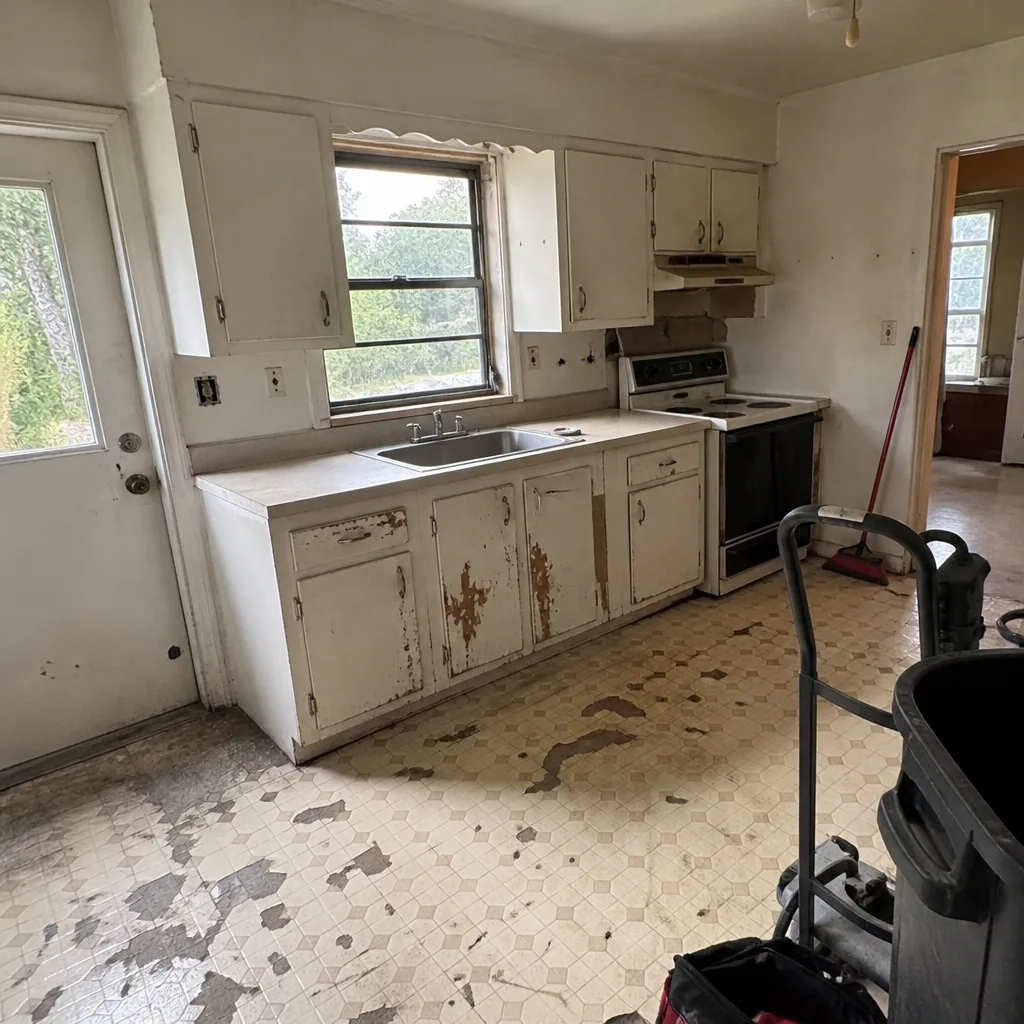 Before
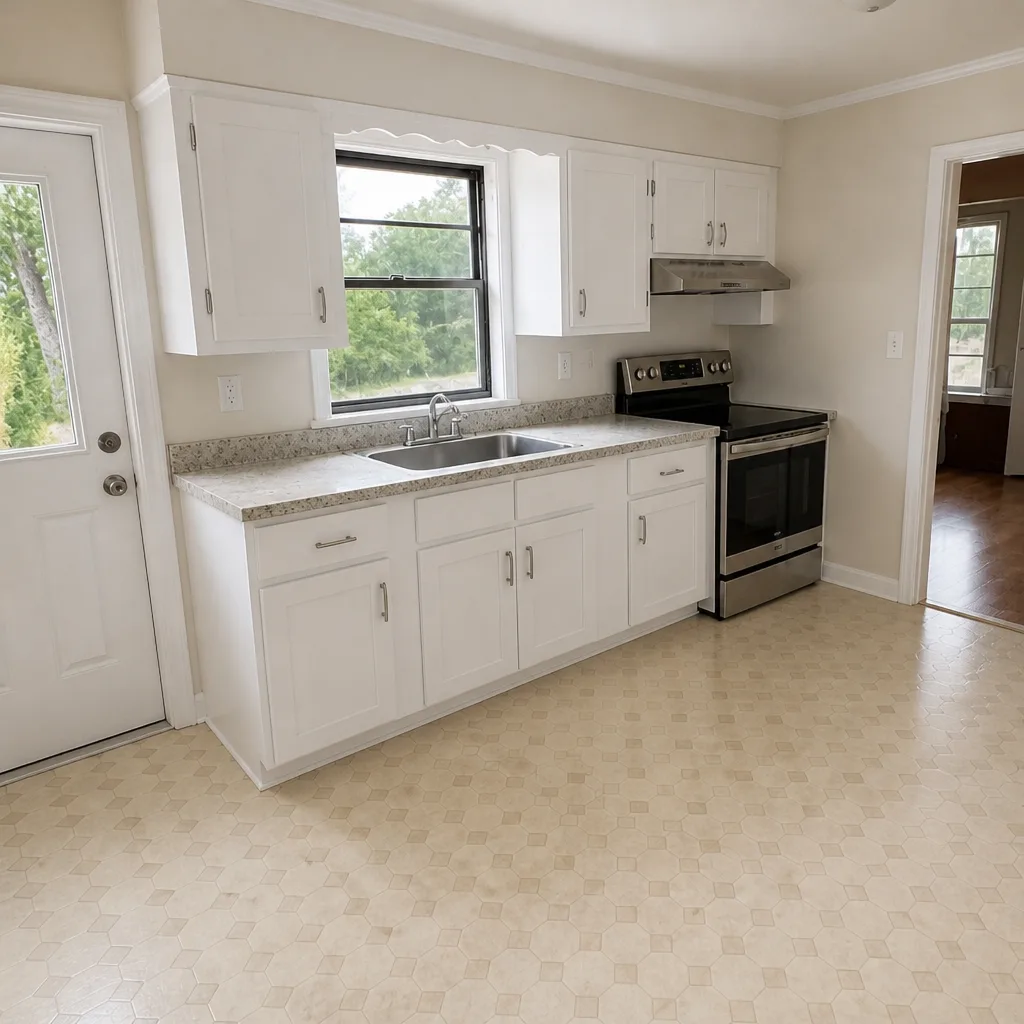 After
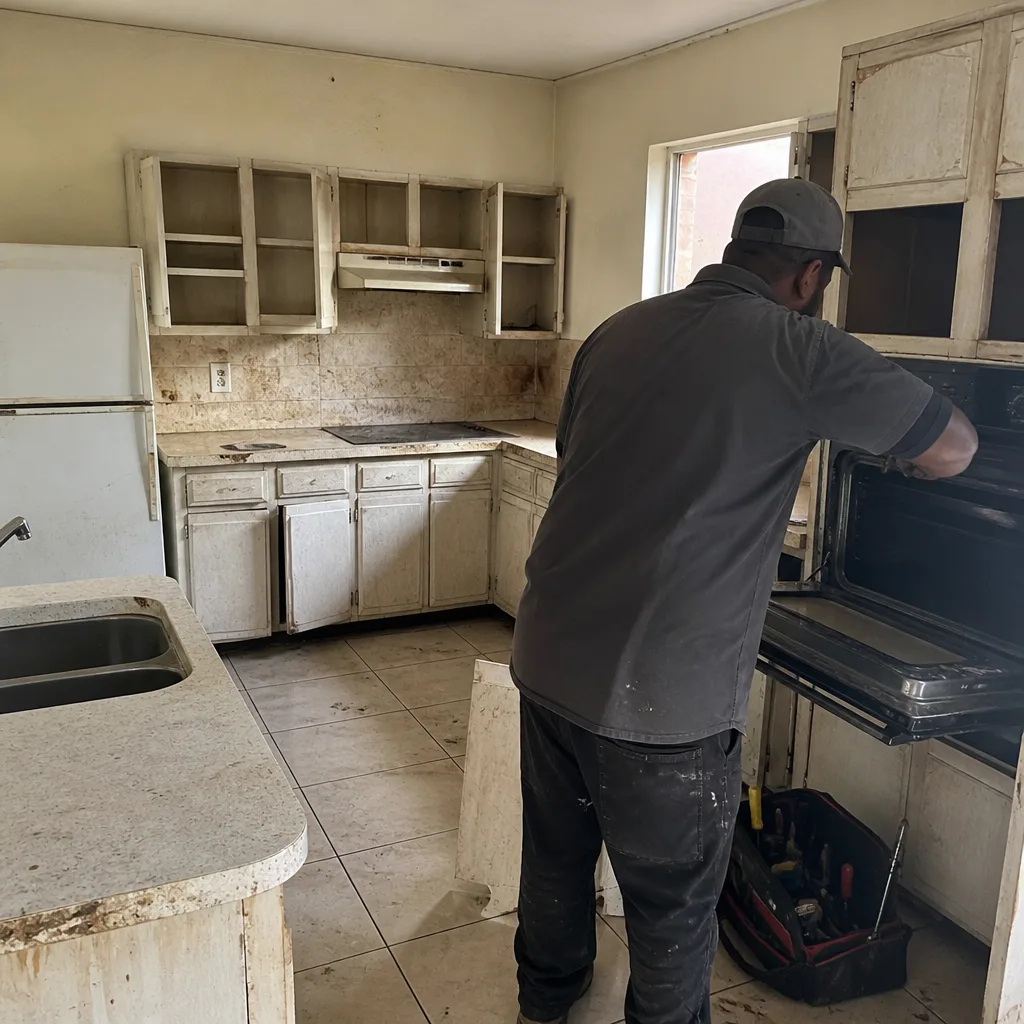 Before
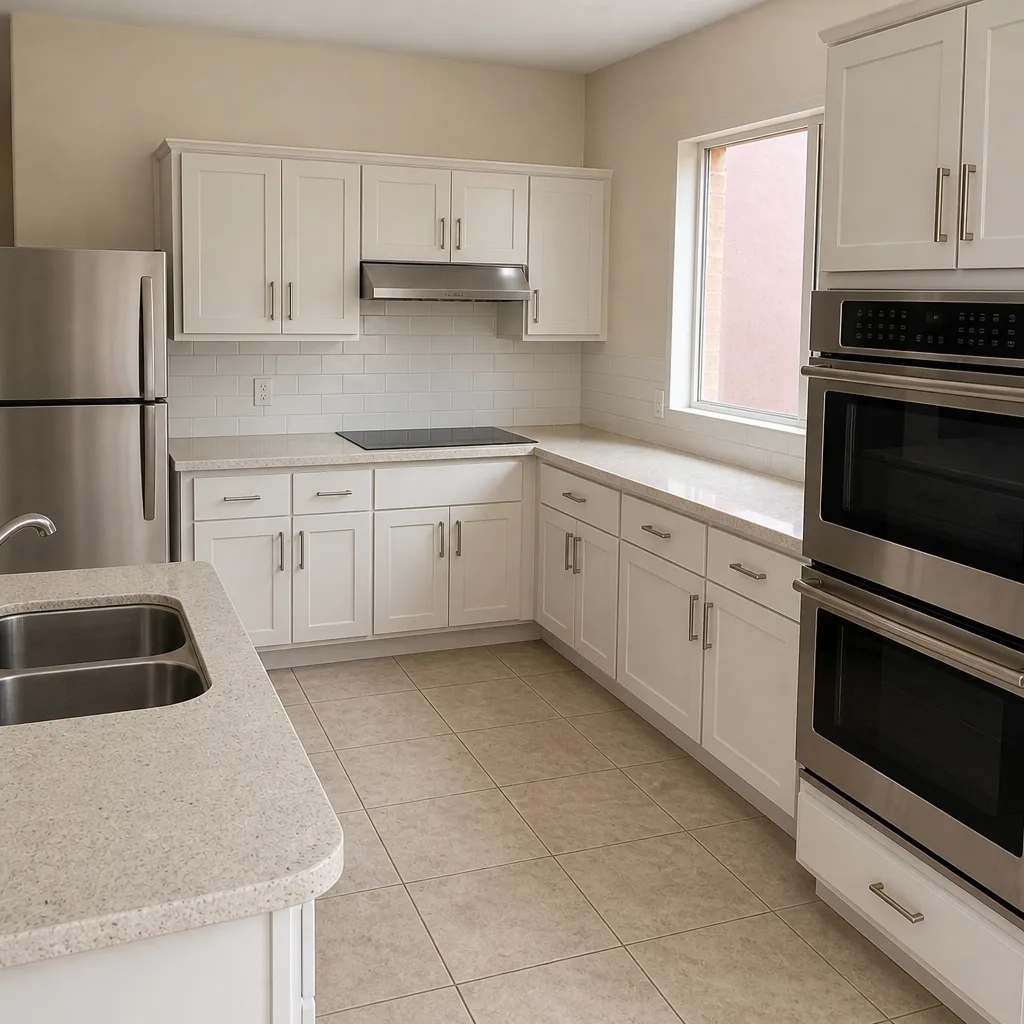 After
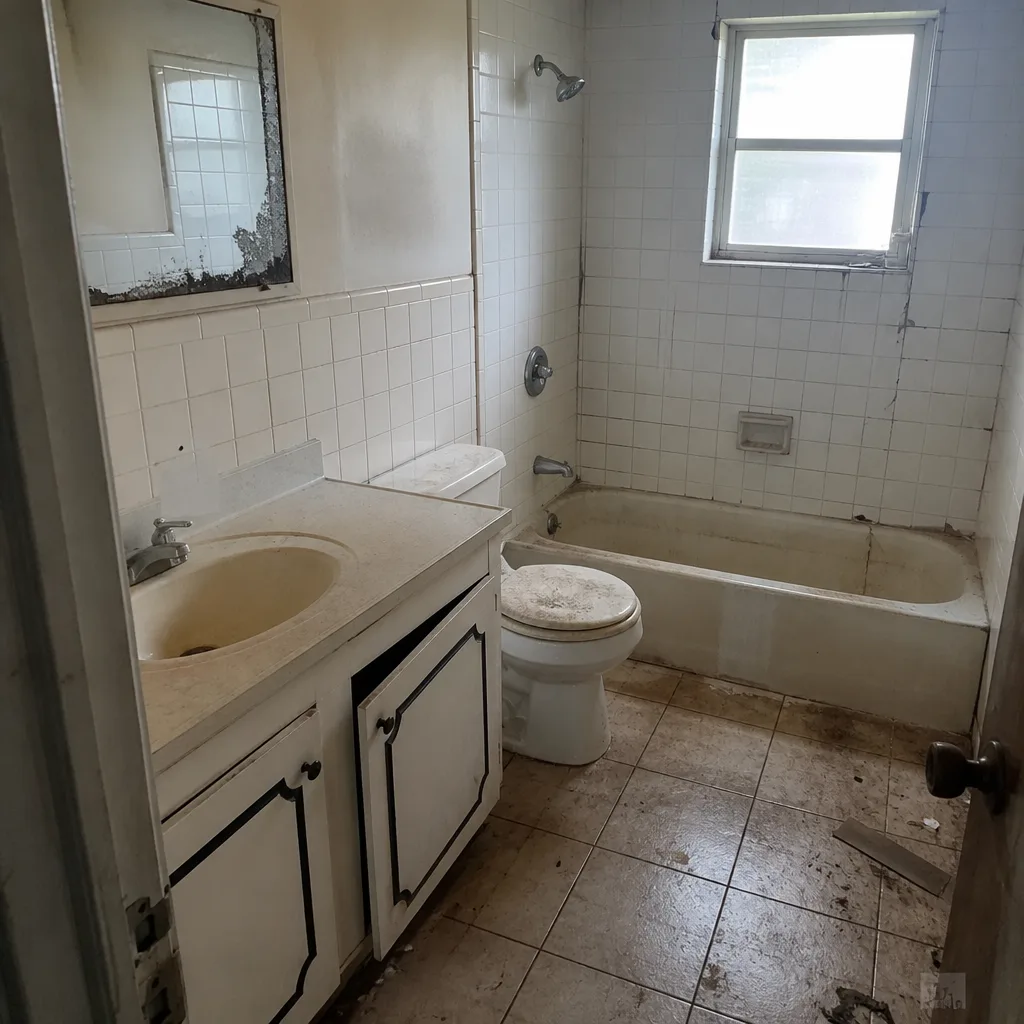 Before
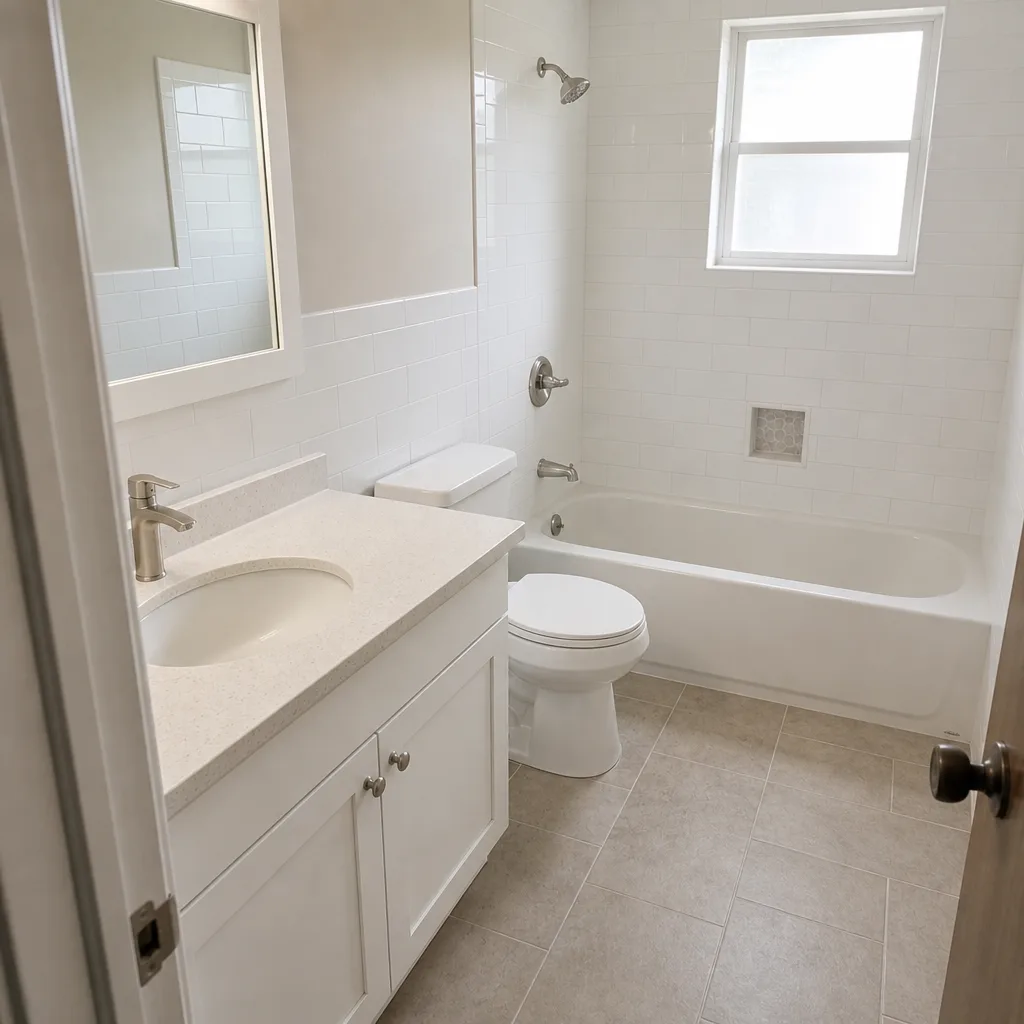 After
When to Call a Professional
Call a professional if any of the following are true: a tile in a shower or around a toilet feels soft underfoot, more than two adjacent tiles register hollow on the tap test, the bathroom door no longer latches cleanly, a musty smell appears only after showering and clears by morning, moisture reads above 20% at a perimeter wall, or the ceiling below the bathroom shows any stain. Also call if the shower valve handle has turned gritty in the last 12 months; that’s a $140 to $260 repair now and a $650 to $1,400 repair a year from now. Don’t open a shower wall or floor yourself to investigate. The waterproofing assembly is sealed under tile, and any probe you make turns a contained moisture issue into a full membrane replacement. Rowan Construction Group Homestead offers free estimates in Homestead. Call (844) 834-4248 to schedule yours, and bring any written estimate you already have for a free second opinion reviewed line by line.
Frequently Asked Questions
Tile that flexes or feels soft underfoot, grout that darkens at the floor perimeter, a musty smell that only appears after showering, caulk pulling away at the tub-to-floor joint, and a door that stops latching cleanly. Any of the five, especially two together, warrants a scope inspection with a moisture meter and camera probe. Call (844) 834-4248 for an exact quote on an inspection and repair; estimates are free.
It depends on what’s wet. Re-grouting runs $180 to $420. A shower pan membrane replacement runs $2,800 to $6,500. Subfloor and joist repair after a long-running leak runs $3,500 to $9,000. The earlier you catch it, the closer you stay to the low end. Call (844) 834-4248 for a written line-item price before any work starts.
A soft tile means the tile has lost its bond to the thinset, and that only happens when water has compromised the bond or the substrate. In a shower, soft tile around the drain or curb means the waterproofing membrane below has failed. A single soft tile is worth a look; a cluster around the drain is a membrane replacement. Call (844) 834-4248 for a written repair price.
No, not without a signed change order. Under the Haven Standard, every change order is signed before any of the change is made, and the written scope and written price govern the whole job. If something unexpected turns up behind the wall, the change order documents it and you approve it before the crew touches it. Call (844) 834-4248 for a written estimate that follows that rule.
A caulk or grout repair is same day. A shower valve cartridge is same day. A shower pan membrane replacement is 3 to 6 days. A subfloor and joist repair is 5 to 14 days, depending on the extent of the wet zone. You’ll get the day count in the written scope. Call (844) 834-4248 for a site visit and a written scope with the timeline.
Permits are pulled for any work that changes plumbing rough-in, opens structural framing, or replaces a shower pan. Surface grout, caulk, and fixture cartridge replacement on the same body typically don’t require a permit; a valve body replacement that opens the wall usually does. We’ll tell you in the written scope which permits apply, and the signed scope includes that line. Call (844) 834-4248 to have the permit question answered on your specific job.
The Bottom Line
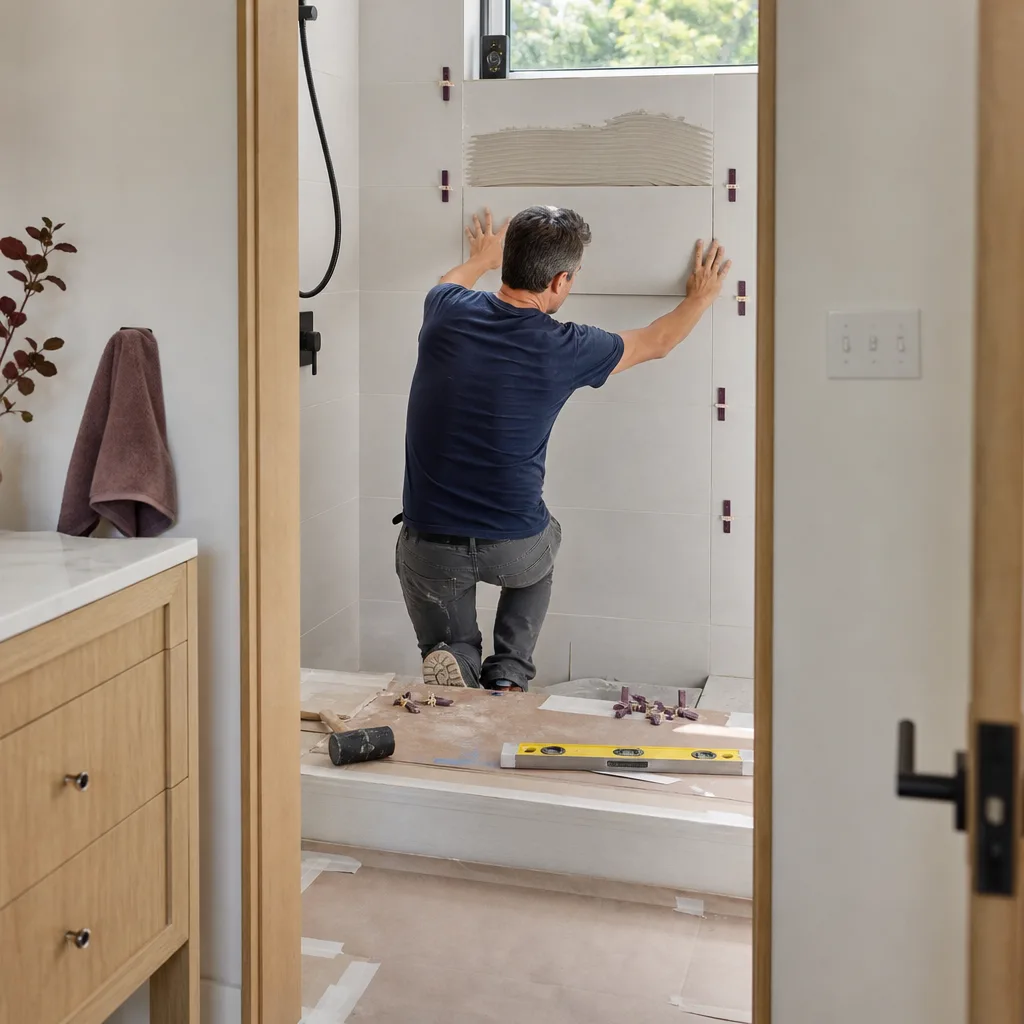
The bathroom warning signs that matter most are the ones you can find in a 60-second tap test and a walk-through: soft tile, grout that darkens at the perimeter, a musty smell after showering, caulk pulling back, and a door that stops latching. Water stains on the ceiling are the late sign, not the early one. Catch the early signs and you’re spending $180 to $600. Miss them and you’re in the $3,500 to $9,000 range. In Homestead, hard water adds valve-seat scaling to the list, and a bathroom fan that isn’t moving air makes every other sign worse. Document what you find, get a written scope with a written price before any work starts, and insist on the photo record when the crew leaves. That’s the whole guide, and it’s the whole reason we write the price down first.
Written by the team at Rowan Construction Group Homestead.