Last updated November 17, 2026








Free written scope consultation - allowances, timeline, and change-order rules on paper before a single trade is scheduled
Bathroom Remodeling Maintenance Schedule: What to Do and When
Grout doesn’t fail because it was installed wrong. It fails at month 18, when the sealant wore off and nobody noticed. The remodel warranty expired at month 12. We’ve pulled tiles out of Homestead showers that were set perfectly and still leaking, because the caulk at the shower pan had been quietly cracking for a season while the homeowner assumed “new bathroom” meant “no maintenance.” It doesn’t. A bathroom is a wet room built from materials that all have a service life, and the calendar starts the day the last piece of trim goes on. This guide gives you that calendar: 30-day, 6-month, 1-year, and 3-year tasks tied to specific materials, product brands, and manufacturer warranty language, adjusted for South Florida humidity.
Quick Answer
A bathroom remodel needs maintenance at four intervals: a 30-day check of caulk, grout, and supply lines; a 6-month cleaning of the exhaust fan and re-seal of shower grout; an annual inspection of the toilet flange, shutoff valves, and tile sealant; and a 3-year deeper look at the shower pan, fan motor, and fixture cartridges. In Homestead, humidity means you should shorten the caulk and grout-seal intervals by roughly half compared to a dry climate.
Styles & brands we work with
- Kitchen remodeling
- Bathroom remodeling
- Home additions & ADU
- Roofing
- Windows & doors
- Driveway & pavers
- Fence
Table of Contents
- Why the Maintenance Calendar Matters More Than the Install
- The First 30 Days: What to Check Before You Settle In
- The 6-Month Mark: Exhaust Fan, Grout Sealer, and Caulk
- The 1-Year Inspection: The Tasks That Protect Your Warranty
- The 3-Year Deep Check: Shower Pan, Cartridges, and Fan Motor
- How Homestead Humidity Changes the Schedule
- Which Skipped Tasks Void a Tile or Fixture Warranty
- When Maintenance Failure Becomes a Repair: Current Costs
Why the Maintenance Calendar Matters More Than the Install
In our experience across bathroom remodels, the workmanship on a tile shower is rarely what fails first. What fails is the sealant at the changes of plane – the corners, the curb, the joint where wall tile meets floor tile. Those joints move. Tile and thin-set are rigid; the framing behind them is not. The flexible material in the joint is what absorbs the movement, and flexible materials have a shorter service life than the tile around them.
That’s the whole logic of a maintenance schedule. Tile can last 50 years. The caulk sealing it lasts 3 to 5 in a dry climate and 18 months to 2 years in South Florida. Grout sealer lasts 1 to 3 years in a ventilated bathroom and 6 to 12 months in a small one with poor airflow. The calendar isn’t about the tile. It’s about the thin, replaceable layer that keeps water out of the substrate.
Most homeowners get a folder at closeout with the warranty cards and nothing else. No calendar. So the fan runs loud for two years, the caulk cracks, and the first sign of a problem is a soft spot under the vinyl floor or a musty smell that doesn’t go away. A written schedule is cheaper than a subfloor repair. Here’s ours, and it holds whether your bathroom is a hall bath or a primary suite off a Homestead patio home.
The First 30 Days: What to Check Before You Settle In
New construction and new remodels both settle. Wood framing takes on moisture, caulk cures, and grout shrinks slightly as the mix dries. The first 30 days are when the small failures happen, and they’re free to fix if you catch them inside the workmanship window.
- Press every caulk joint at the shower curb, corners, and tub edge with a dry finger. You’re looking for a gap between caulk and tile. Any separation is a re-caulk, not a wait-and-see.
- Look at the grout lines in the shower floor for pinholes or hairline cracks. These show up after the first two weeks of regular showers. A pinhole lets water past the surface layer.
- Run the exhaust fan and hold a tissue to the grille. The tissue should stick. If it flutters or falls, the fan isn’t pulling air and the bathroom is holding moisture.
- Check the supply lines under the sink and behind the toilet with a dry paper towel. Any dampness on the towel points to a loose compression fitting.
- Open and close every shutoff valve once. Valves that sit untouched for years seize, and the first time you need to shut off water is the worst time to find that out.
- Watch the toilet base for wobble after a week of use. A rocking toilet means a loose closet bolt or a bad wax ring, both of which lead to a rotted subfloor.
If anything on that list fails and the remodel is inside its workmanship warranty, call the contractor that did the work. Under the 365-Day Done Right Promise, we come back and make it right. That’s what the first year is for – catching the settling issues before they turn into a repair. Our Rowan Construction Group Homestead home page lists the seven trades we cover, in case the issue crosses into something else.
The 6-Month Mark: Exhaust Fan, Grout Sealer, and Caulk
Six months is where a bathroom starts telling you whether its ventilation is adequate. The exhaust fan is the single most important piece of moisture control in the room, and it’s also the piece nobody cleans.
Exhaust fan cleaning. Pop the grille off, wash it in warm soapy water, and vacuum the fan blades with a soft brush attachment. Dust on the blades unbalances the fan and drops its airflow, which means moisture lingers. If your fan is rated at 80 CFM (cubic feet per minute – the volume of air it moves) when new, a dust-loaded fan might be moving 50. In a Homestead bathroom, that difference is the margin between drying out and growing mold at the grout line.
Grout sealer. Shower walls in a well-ventilated bathroom get sealed once a year. Shower floors and any wall in a small, poorly vented bathroom (many of the interior baths in Homestead’s older patio-home stock) get sealed every six months. Products that meet manufacturer re-application specs include:
- Aqua Mix Sealer’s Choice Gold – solvent-based, 1 to 3 years depending on the tile.
- Miracle Sealants 511 Impregnator – penetrating sealer, good for porcelain and natural stone, reapply annually on shower floors.
- StoneTech BulletProof – for natural stone, matches the re-application interval in the tile manufacturer’s care guide.
Caulk re-check. Same finger-pressure test as the 30-day check. In South Florida, the interior caulk around a tub or shower pan should be inspected every six months, not every year. The heat and humidity inside a bathroom accelerate the breakdown of the latex-acrylic caulk most builders use. If the caulk has shrunk or pulled away, replace it with a 100% silicone caulk rated for wet areas.
The 1-Year Inspection: The Tasks That Protect Your Warranty
At one year, the remodel’s workmanship warranty window is closing and the fixture warranties are taking over. This is also when you find out whether the small stuff got away from you.
Toilet flange and wax ring. Pull the toilet, inspect the flange (the plastic or metal ring the toilet bolts to and that connects to the drain), and look at the wax ring for water staining. A failed wax ring is a $30 part that becomes a $1,200 subfloor repair if left alone.
Shutoff valves. Under-sink and behind-toilet valves should be opened and closed twice a year to keep them free. If a valve feels stiff, or if it weeps when turned, replace it before it fails. This is a job for a plumber.
Tile and countertop sealant. Natural stone (marble, travertine, granite) and unglazed tile need annual sealer. Porcelain tile and quartz countertops don’t – they’re non-porous – but the grout between them still does.
Mirror and cabinet hardware. Tighten the screws on cabinet hinges and drawer pulls. Mirror clips and hanging hardware on a heavy mirror should be checked for play; a loose mirror drops, and that’s a $400 replacement for a $2 screw.
One year is also the point where a soft spot in the floor, a stain on the ceiling below, or a persistent musty smell means something in the assembly is wet. Don’t wait for the next interval. Any of those three is a call-a-professional signal. If the leak originates outside the bathroom – a roof flashing or a window seal – the fix might sit with our Fence Installation in Homestead or Home Additions & ADU in Homestead crew instead. Water finds the farthest path.
The 3-Year Deep Check: Shower Pan, Cartridges, and Fan Motor
By year three, the components with a finite service life are due. This is the inspection that separates a bathroom you keep for 25 years from one that gets torn out at year 12.
- Shower pan water test. Plug the drain, fill the pan with an inch of water, and let it sit for a few hours. Watch from below if you can access the ceiling. Any seepage means the pan liner or the sealant at the curb has failed.
- Shower and tub cartridge. If the handle is stiff, drips when off, or the temperature drifts, the cartridge (the replaceable valve inside the faucet) is wearing out. Delta and Kohler both sell replacement cartridges for most current models; the part is $25 to $90, the labor is a plumber’s visit.
- Exhaust fan motor. Listen for a rattle or a high-pitched whine. The motor or the bearing is going. A new fan is $120 to $350 installed, far less than the mold remediation a dead fan makes likely.
- Grout line inspection in the shower floor. Three years is where hairline cracks that were cosmetic at year one become water paths. Any crack wider than a hair needs to be ground out and re-grouted, not just sealed over.
- Caulk full replacement. Not inspection. Full removal and re-caulk at the shower pan, tub, and vanity backsplash. Three to five years is the normal lifespan of bathroom caulk; in Homestead, three is the honest number.
Around year three is also when a bathroom remodel that’s going to be used by a growing family runs into its layout limits. If you’re considering adding a second bath or converting a closet, our Home Additions & ADU in Homestead page covers how that work is scoped and priced.
How Homestead Humidity Changes the Schedule
Homestead sits in one of the most humid climates in the continental United States. Average relative humidity runs above 70% for much of the year, and interior bathrooms in even well-sealed homes see elevated moisture because the outdoor air that leaks in is already wet. That shifts every interval on the schedule.
Compare two bathrooms with identical materials. In a dry-climate house, shower caulk lasts 3 to 5 years, grout sealer lasts 1 to 3 years, and an exhaust fan rated for the room size does its job. In Homestead:
- Caulk – inspect every 6 months, replace every 2 to 3 years.
- Grout sealer – reapply on shower floors every 6 months, walls annually.
- Exhaust fan – clean every 6 months instead of annually, and check airflow against the room’s volume.
- Mold checks at grout joints – quarterly visual inspection, not annual. Dark specks at a grout joint are mold starting in the sealant, not a stain.
The other Homestead factor is airflow. Many of the older homes in the area have small interior bathrooms with a window instead of a fan. A window is not ventilation; an open window in a humid climate lets in more moisture than it lets out. If your bathroom has a window and no fan, adding an exhaust fan is the single highest-value maintenance upgrade available, and it’s cheap.
If you’re planning exterior work that affects how much moisture reaches the house – a new patio, a driveway that changes drainage, a fence line that blocks airflow – the schedule above stays the same, but drainage matters. Our Driveway & Pavers in Homestead page covers how grading and pavers direct water away from the foundation.
Which Skipped Tasks Void a Tile or Fixture Warranty
Fixture warranties are not unconditional. They require normal maintenance, and the manufacturer’s documentation spells out what “normal” means. Skip it, and a warranty claim can be denied.
Kohler. Kohler’s finish warranty and faucet warranty language requires that the product be installed and maintained per their care instructions, and excludes damage from “improper maintenance” or “abrasive cleaners.” The practical upshot: if you scrub a Kohler finish with an abrasive pad, the finish warranty doesn’t cover what happens next.
Delta. Delta’s faucet warranty covers defects in materials and workmanship but excludes damage from improper installation, misuse, and – in their care guide – failure to follow cleaning and maintenance instructions. Their documentation specifically warns against harsh chemical cleaners on the finish and against letting water freeze in the valve, which matters less in Homestead and more for the seasonal homeowner.
Tile manufacturers. Tile itself is durable and rarely the warranty issue. The sealants and membranes are. Most tile and grout warranties require that grout be sealed per the manufacturer’s recommendation, and many specify a re-seal interval. Skip the sealant and the grout failure is yours.
The rule of thumb: keep the care-and-maintenance sheet that came with each fixture and sealant. If a claim comes up, that sheet is the difference between a covered replacement and a polite denial. When we hand over a bathroom remodel, we include those sheets in the closeout folder.
When Maintenance Failure Becomes a Repair: Current Costs
The line between maintenance and repair is worth knowing, because the price jump is steep. Maintenance is re-caulking a joint for $15 of product and an hour. Repair is replacing water-damaged substrate underneath it. Here’s where that line sits and what the repair side costs at current labor rates:
- Re-caulk a shower or tub (maintenance): $15 to $40 in materials if you do it, $150 to $300 for a pro.
- Re-grout a shower floor (maintenance): $200 to $500.
- Replace a failed shower pan liner (repair): $900 to $2,200, more if tile is replaced.
- Replace a rotted subfloor section (repair): $600 to $1,800 depending on size and access.
- Mold remediation in a bathroom (repair): $1,200 to $3,500.
- Replace an exhaust fan, motor only (repair): $120 to $350 installed.
- Replace a shower cartridge (repair): $150 to $350 in labor plus the part.
The pattern is obvious: $15 of caulk a year versus $2,000 of pan liner. The maintenance schedule is the cheapest insurance in the house. When a repair is needed and the scope is bigger than a single trade – say a shower rebuild that touches plumbing, tile, and drywall – that’s when a written scope and a written price matter. Call (844) 834-4248 for a free estimate on the repair, and we’ll put the number in writing before anyone picks up a tool.
Common Mistakes to Avoid
- Assuming new means maintenance-free. A bathroom remodel resets the clock, not the calendar. The materials still need the same care on day one as they would at year five. New tile, old obligations.
- Skipping the exhaust fan because it “still runs.” Running and moving air are different things. A dust-loaded fan still spins; it just doesn’t clear the room. Clean the grille every six months in Homestead.
- Using abrasives on fixture finishes. The finish warranty on a Kohler or Delta fixture is voided by abrasive cleaners. Bar Keepers Friend and a soft cloth, not a scrubbing pad, is what the care guide calls for.
- Sealing grout without cleaning it first. Sealer over dirt and mold traps it in. Clean the grout, let it dry fully, then seal. Two days of work, in that order.
- Waiting for a soft spot to “get worse.” A soft spot under the vinyl or tile means water has already reached the substrate. It doesn’t improve. It spreads.
- Ignoring a window-only bathroom. Many older Homestead homes have a small interior bath with a window and no fan. An open window in this climate adds moisture. Add a fan.
- Throwing away the care sheets. The warranty language on sealants and fixtures is what a claim is decided on. Keep the folder.
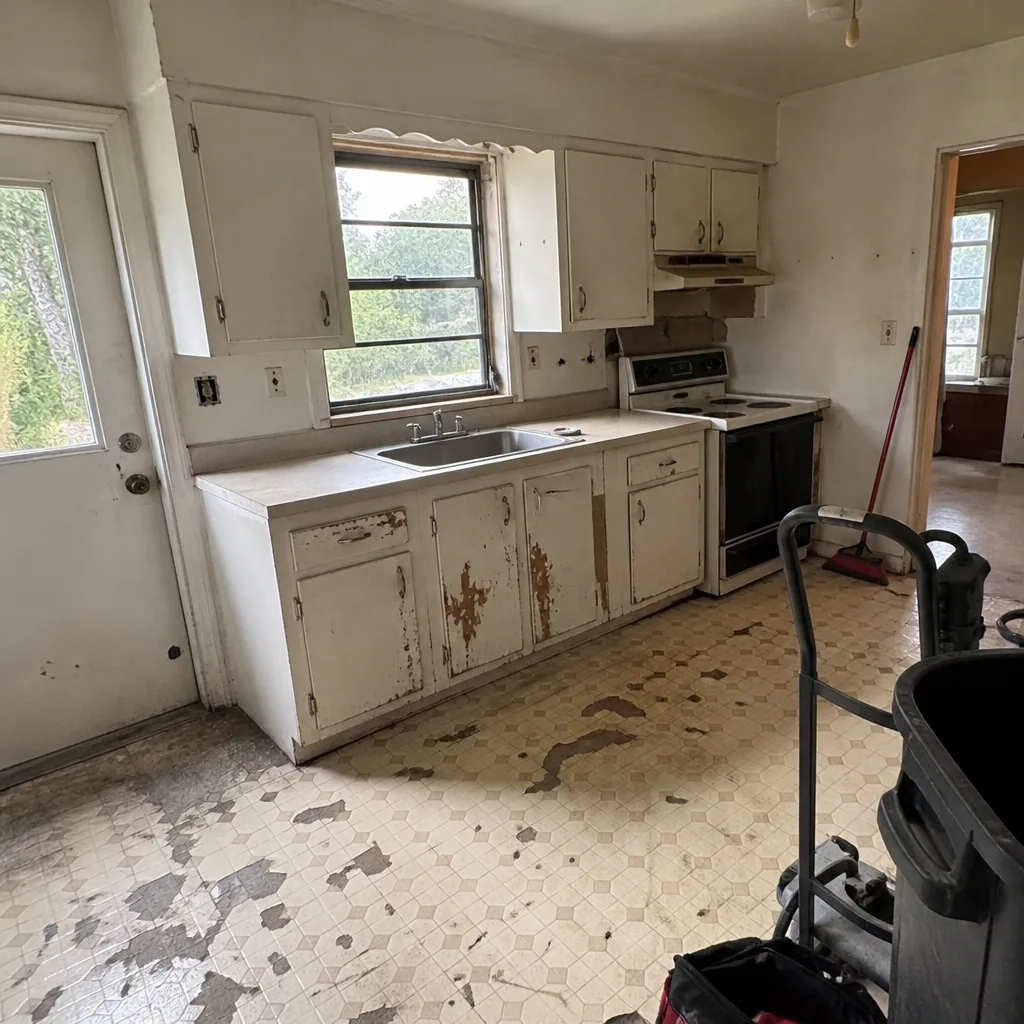
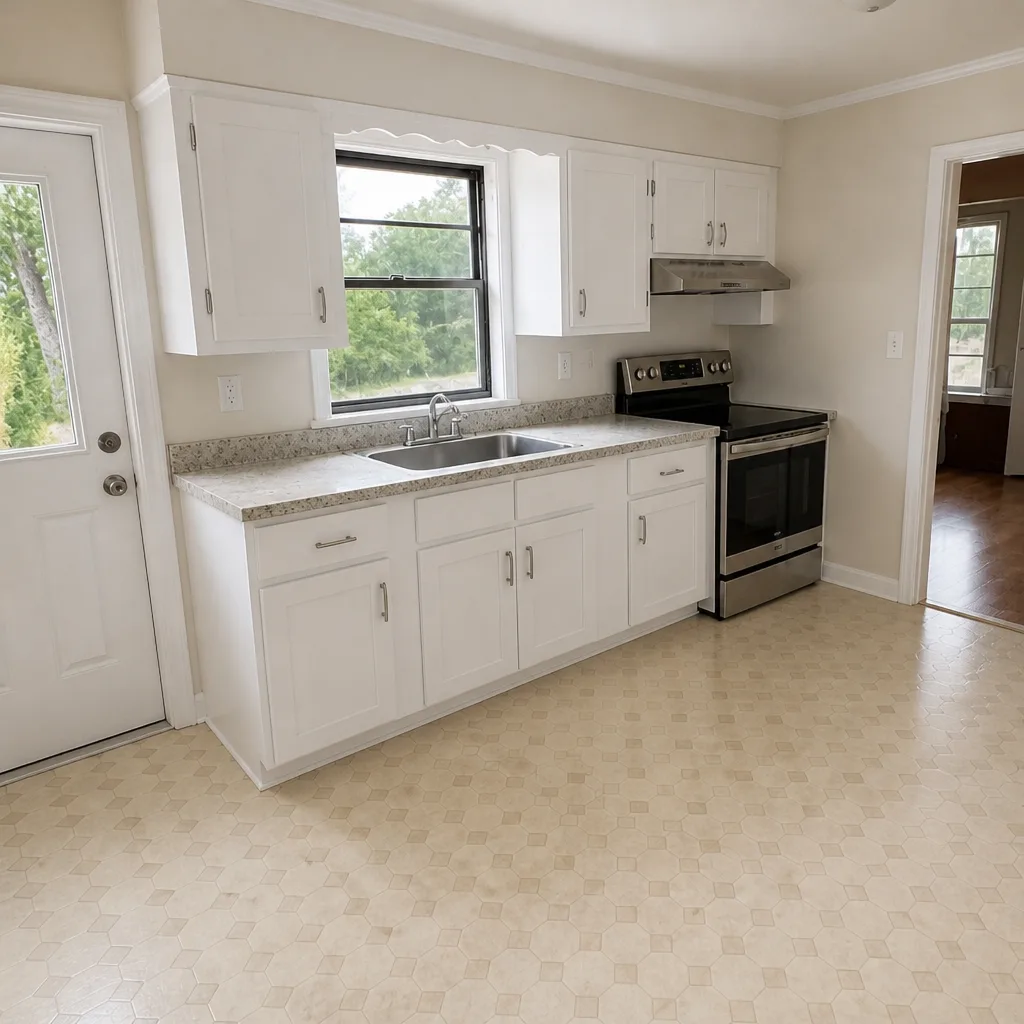
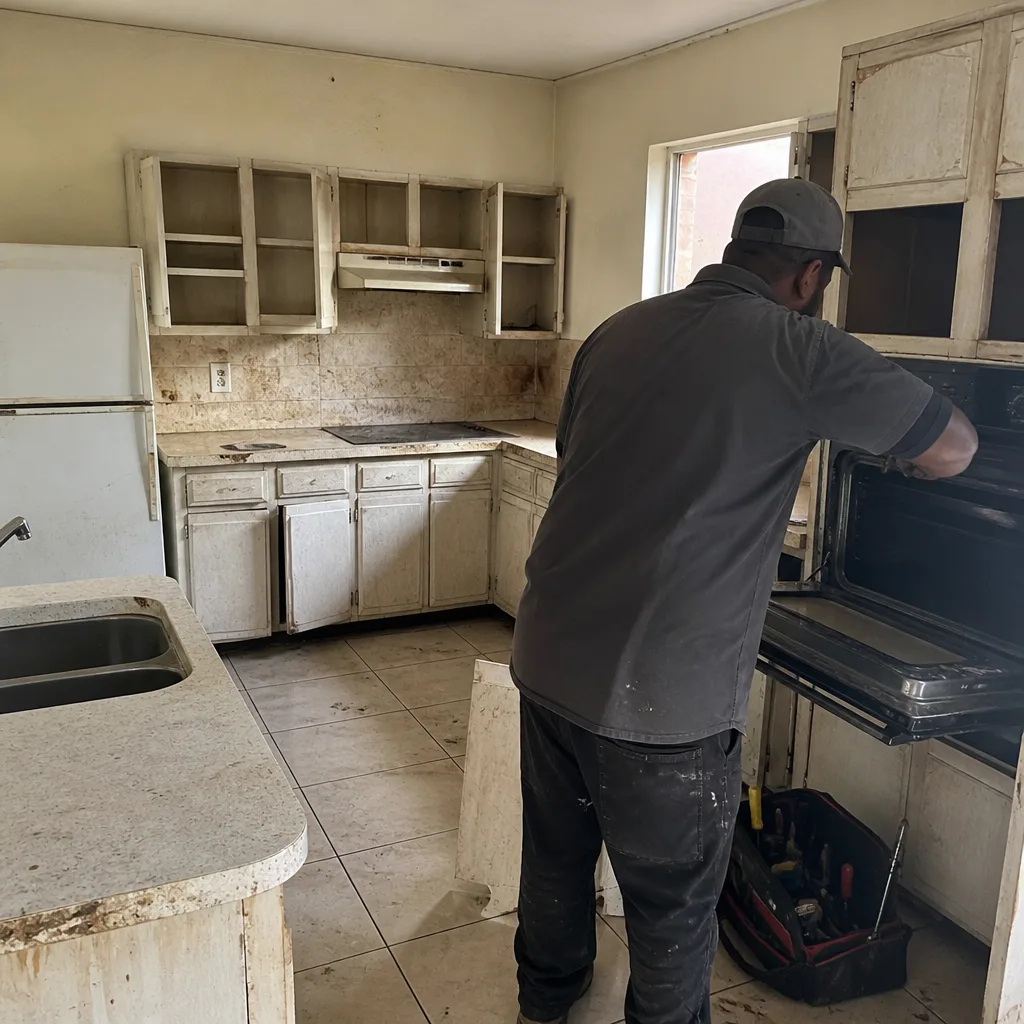
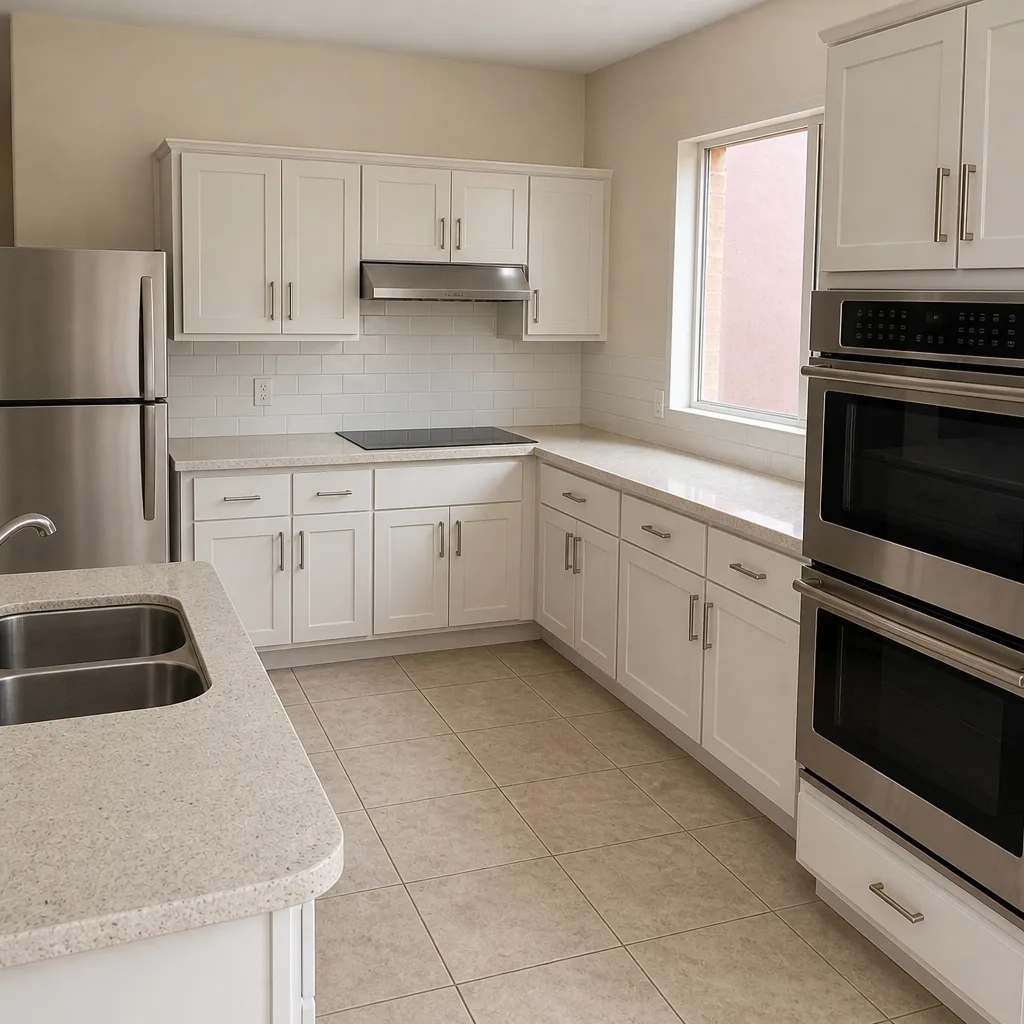
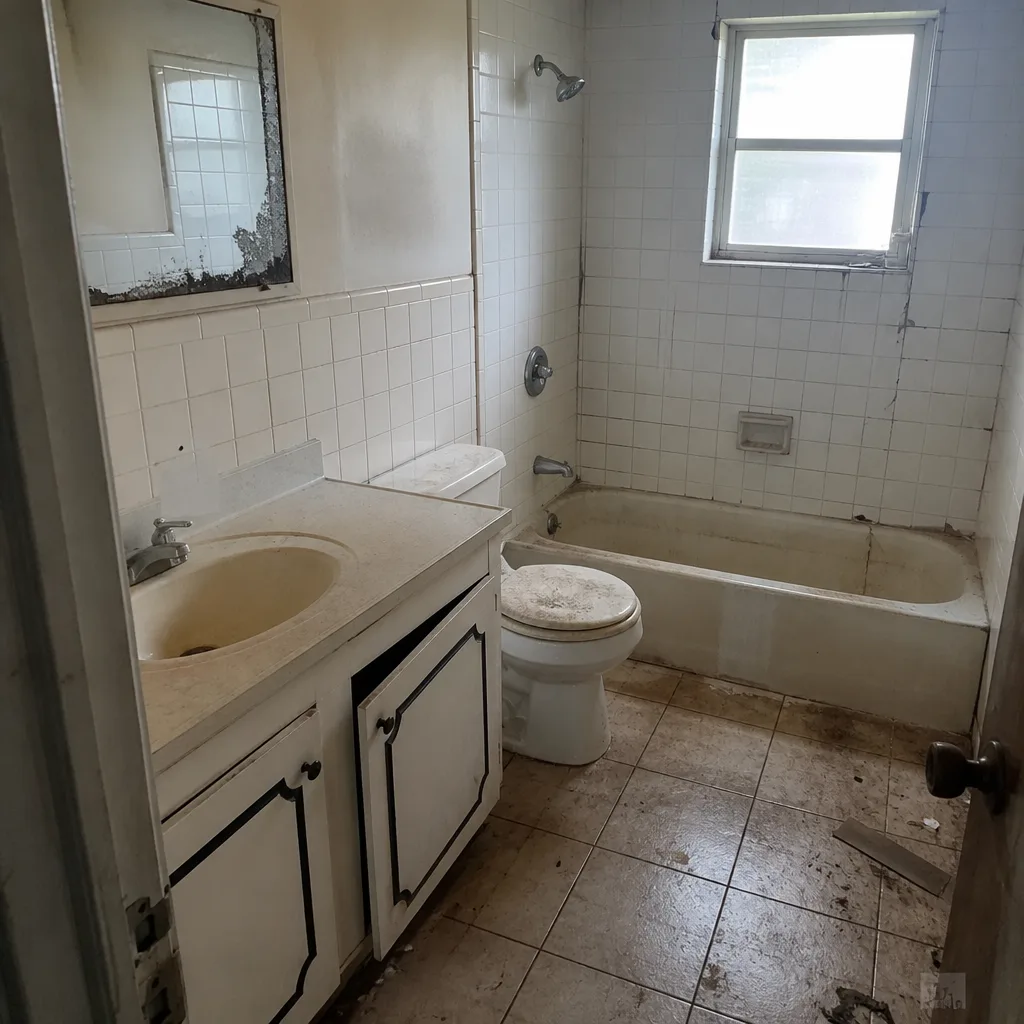
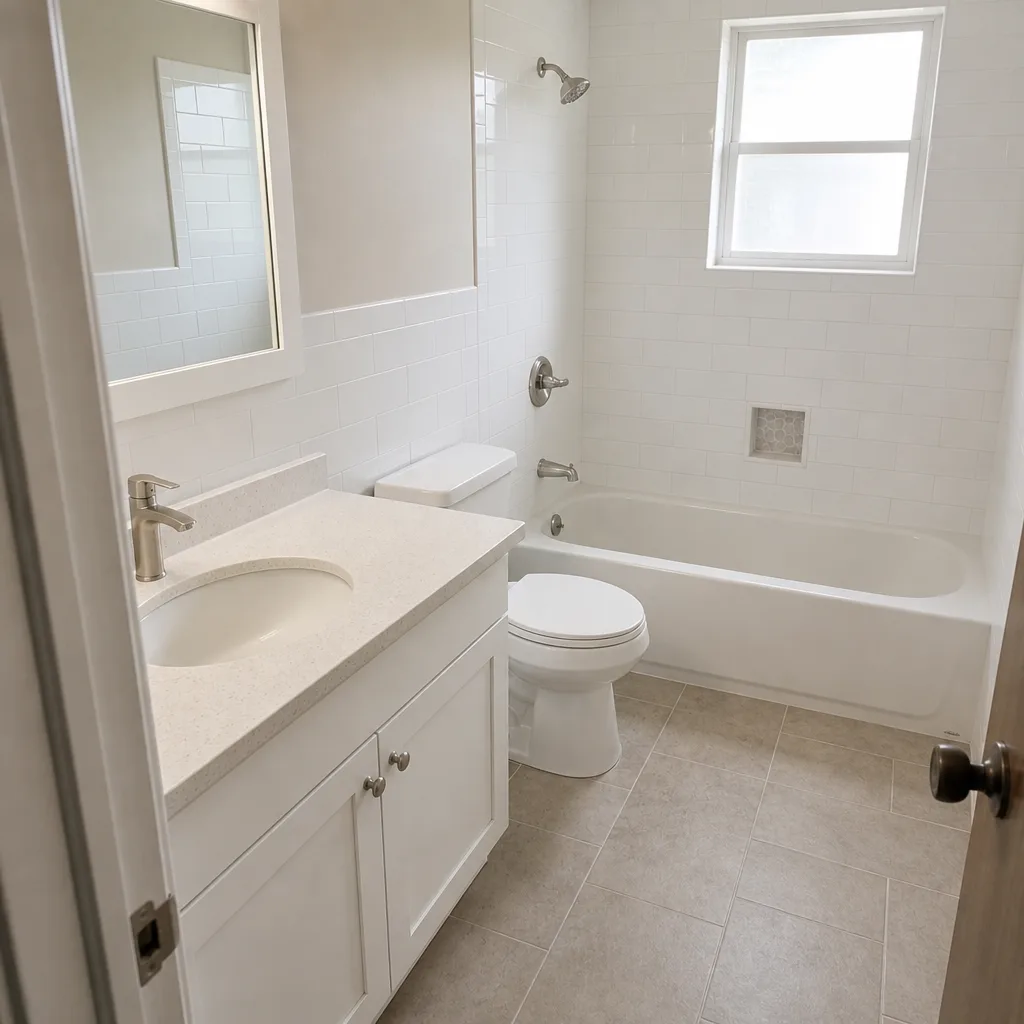
See the difference
 Before
 After
 Before
 After
 Before
 After
When to Call a Professional
Some maintenance is yours: wiping the fan grille, re-sealing grout, replacing caulk. Some is a call. Call a professional when you find water staining where you can’t see the source, a soft or spongy floor, a mirror or cabinet pulling away from the wall, mold that returns after cleaning, a shutoff valve that won’t close, or a shower pan that fails the water test. Also call before you pull a toilet to inspect the wax ring, since a bad reinstall can damage the flange and turn a $30 part into a $400 repair. Rowan Construction Group Homestead offers free estimates in Homestead. Call (844) 834-4248 and we’ll look at it, document what we find with a photo record, and put a written price in front of you before any work starts.
Frequently Asked Questions
Inspect every 6 months and replace every 2 to 3 years in Homestead. The heat and humidity break down latex-acrylic caulk faster than in a dry climate. Press the joint with a dry finger – any gap between caulk and tile means replace. Call (844) 834-4248 for a free estimate if the caulk failure has gone further than a re-caulk.
Yes, usually within the first 30 days after the grout cures. Many tile installers seal at closeout, but the sealant has a limited life and the re-application interval starts from that day. Check your closeout paperwork to see what was applied, then re-seal on the schedule above. Call (844) 834-4248 if you’re unsure what was used – it’s free to ask, and free to get a written answer.
It can contribute to a denied claim, though the fan itself is usually the warranty subject. More important, a dirty fan lets moisture build up at the grout joints, and that moisture is what fails the grout and the tile membrane underneath. The fan is cheap maintenance that protects the expensive work. Call (844) 834-4248 for a fan replacement quote if yours is loud or weak.
A hairline crack in a dry area is cosmetic and gets sealed. A crack in a shower floor, tub surround, or any wet area is a water path, and hairline or not, it needs grinding out and re-grouting. In Homestead’s humidity, wet-area cracks get bigger fast. Call (844) 834-4248 for a free look if you’re not sure which kind you have.
A musty smell you can’t trace, a stain on the ceiling below the bathroom, or a soft spot at the shower threshold. The water test in the guide above catches it earlier – plug the drain, fill the pan an inch, wait a few hours. Any seepage means the pan liner needs repair. Call (844) 834-4248 for a free estimate on the repair, and we’ll put the price in writing before work starts.
Most of the schedule is DIY: caulk, grout sealant, fan cleaning, visual inspections. Hire a professional for anything involving a shutoff valve, toilet removal, shower cartridge replacement, or electrical work on the fan. Those cross into plumbing and electrical, and a mistake there costs far more than the labor saved. Call (844) 834-4248 if you’d rather have the annual inspection done by a crew that leaves a photo record of what they found.
The Bottom Line
A bathroom remodel is only as durable as the maintenance calendar that follows it, and most homeowners get no calendar at closeout. The short version: check caulk, grout, and supply lines at 30 days; clean the fan and seal grout at 6 months; inspect the toilet flange, shutoff valves, and sealant at 1 year; and test the shower pan, replace cartridges, and re-caulk fully at 3 years. In Homestead, halve every interval because of the humidity. The price of the calendar is a few hundred dollars a year. The price of skipping it – shower pan repair, subfloor replacement, mold remediation – runs from $900 to $3,500. If you want the schedule walked through by a crew that puts the number in writing first, call (844) 834-4248 for a free estimate. Rowan Construction Group Homestead serves Homestead with written prices, signed change orders, and the 365-Day Done Right Promise on every job.
Written by the team at Rowan Construction Group Homestead.